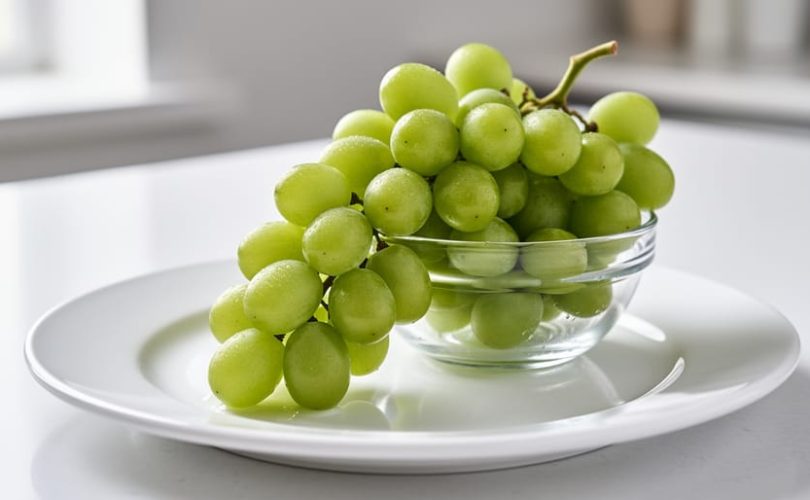
A half-cup serving of seedless green grapes delivers 52 calories, 13.67 grams of carbohydrate, and minimal protein or fat. This makes them a naturally sweet, low-calorie snack that fits easily into calorie tracking apps and most eating patterns, whether you’re aiming to manage weight, fuel workouts, or simply understand what you’re eating.
The growing interest in green grape nutrition reflects a broader shift toward food transparency. People want real numbers, not vague health claims. Per 100 grams, green grapes provide 69 calories and 15.5 grams of natural sugars, along with small amounts of fiber and micronutrients that support everyday wellness. These figures matter when you’re comparing fruits, planning meals around specific macros, or deciding how grapes fit alongside other carbohydrate sources in your day.
What makes green grapes particularly useful is their versatility. They travel well, require no preparation, and offer consistent portion sizes that simplify tracking. Unlike processed snacks with long ingredient lists, grapes give you straightforward data: mostly water and natural sugars, with negligible fat and protein. This transparency helps you make informed choices that align with your personal health goals, without forcing you into rigid rules or eliminating foods you enjoy.
Green Grapes Nutrition Facts: Breaking Down What’s Inside
Calories and Energy
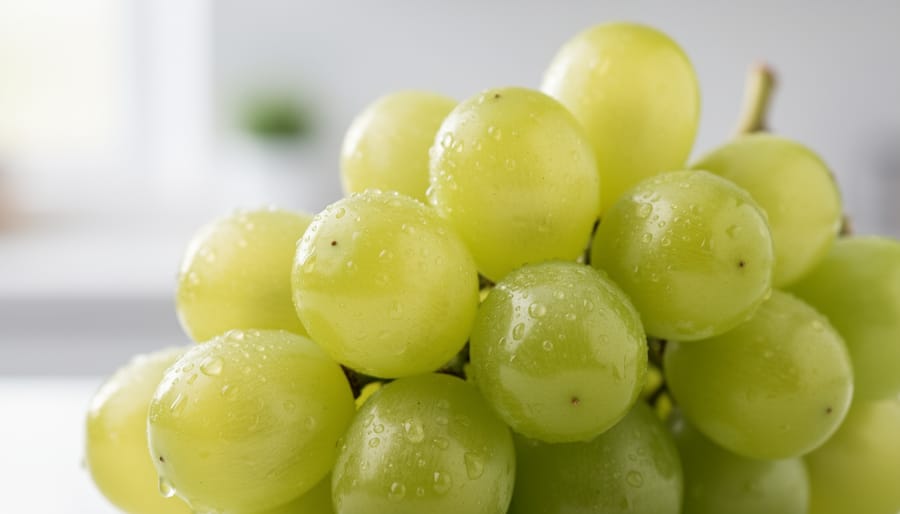
A half-cup of green grapes delivers 52 calories per half-cup making them a genuinely light snack when you understand the context. That’s roughly the same energy as a small apple slice or a tablespoon of hummus, enough to satisfy a between-meal craving without derailing your eating plan.
For perspective, if you’re aiming for around 2,000 calories daily, a half-cup serving represents just 2.6% of that total. You could enjoy grapes mid-morning, use them to round out lunch, or grab a handful post-workout without needing to adjust much else. The key is recognizing that grapes offer quick-digesting energy from natural sugars, which works well when you need a boost or want something refreshing without heaviness.
Where people sometimes run into trouble is eating directly from the bag. Grapes are easy to overeat because they’re sweet, bite-sized, and require no prep. A full cup doubles the calories to around 104, and three cups during an evening movie becomes a 300-calorie session. None of that’s inherently problematic, but it’s worth being aware of if you’re tracking intake or trying to manage portion sizes intentionally. Pre-portioning into small bowls gives you the satisfaction of finishing what’s in front of you while keeping quantities aligned with your actual hunger.
Carbohydrates and Natural Sugars
That 13.67g carbohydrate serving in half a cup of green grapes comes almost entirely from natural sugars, about 11.6 grams, with less than a gram from fiber. People often worry about fruit sugar, but it behaves differently in your body than the refined sugar added to processed foods. The natural sugars in grapes arrive packaged with water, which slows digestion, and trace amounts of nutrients that support metabolism.
This matters when you’re making food choices. A handful of green grapes delivers sweetness alongside hydration and micronutrients, while a comparable amount of candy provides sugar alone. Your body processes them differently. The fiber content in grapes is modest, but the whole fruit format still creates a more gradual energy release than drinking grape juice, where fiber is stripped away.
If you’re managing carbohydrate intake for blood sugar control or specific dietary goals, grapes do contribute meaningful carbs. They won’t derail balanced eating, but portion awareness helps. A half-cup serving fits comfortably into most eating patterns. The key is understanding that fruit sugar isn’t inherently problematic, context and total dietary pattern matter more than isolating one nutrient in one food.
Protein, Fat, and Fiber Content
Green grapes are honest fruits in every sense. That half-cup serving delivers just 0.54g protein and 0.12g fat, and you’ll find a modest 0.9g of fiber per 100g. If you’re looking for a protein source or a fiber powerhouse, grapes aren’t going to fill that role.
And that’s perfectly fine.
Not every food needs to check every nutritional box. Green grapes serve a different purpose in your eating pattern. They provide quick, natural energy through carbohydrates. They deliver hydration and antioxidants. They satisfy sweet cravings with whole-food nutrients instead of empty calories. They add texture and freshness to meals and snacks.
The minimal protein and fat content actually works in their favor for certain situations. Post-workout, your body prioritizes carbohydrates for glycogen replenishment over protein. As a light afternoon snack, the lower calorie density means you can enjoy a satisfying portion without feeling heavy. Paired with protein-rich foods like cheese or nuts, grapes become part of a balanced plate rather than trying to be the whole plate themselves.
Think of green grapes as specialists, not generalists. They do what they do well, and knowing what they don’t provide helps you build more intentional eating patterns around them.
How Green Grapes Fit Into Your Daily Nutrition Goals
Green grapes work well in almost any eating pattern because they’re naturally portioned, hydrating, and satisfying without requiring preparation. If you’re managing portion sizes or practicing calorie awareness a half-cup serving at 52 calories makes it easy to track what you’re eating without complicated math or measuring. You get sweetness, crunch, and volume for a relatively modest calorie investment.
For those following low-fat or plant-based approaches, green grapes fit seamlessly, they’re virtually fat-free and entirely plant-derived. The 13.67 grams of carbohydrates per serving come primarily from natural sugars, which means they provide quick energy rather than sustained satiety. This makes them excellent for pre-workout fuel or an afternoon energy lift, but less ideal as a standalone snack if you need something that keeps hunger at bay for hours.
If you’re aiming to eat more whole foods, green grapes are one of the simplest wins. They require no peeling, cooking, or assembly, which removes barriers that often derail good intentions. Pair them with protein or fat to create more balanced mini-meals: think grapes with cheese, a handful of nuts, or alongside hard-boiled eggs. This combination slows digestion and balances the natural sugar content.
People managing blood sugar often ask whether grapes fit their goals. The answer depends on portion size and what else you’re eating. A controlled serving alongside protein and fiber typically works better than grazing on grapes alone throughout the day. Context matters more than the fruit itself.
Beyond the Numbers: What Makes Green Grapes Nutritionally Valuable
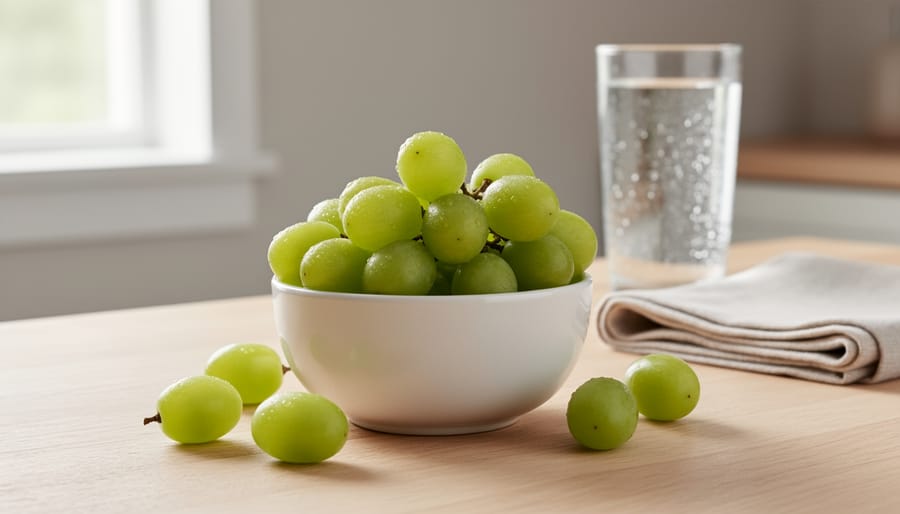
The calorie count tells you what green grapes cost energy-wise, but it doesn’t reveal what you’re actually getting in return. Half a cup of green grapes delivers 88 grams of water, that’s nearly 90% water content. This makes them a hydrating snack choice, especially during warmer months or after workouts when you need both fluid and quick energy.
Green grapes contain vitamin K, which supports bone health and blood clotting. They also provide smaller amounts of vitamin C, an antioxidant that helps with immune function and collagen production. You’ll find potassium in there too, an electrolyte that helps regulate blood pressure and muscle function, though not as much as bananas or oranges deliver.
What sets grapes apart is their polyphenol content. These plant compounds act as antioxidants, helping protect cells from oxidative stress. Resveratrol, found primarily in grape skins, has been studied for its potential cardiovascular and anti-inflammatory effects. Flavonoids like quercetin add to this protective profile, though the amounts vary based on growing conditions and ripeness.
The skin contains most of these beneficial compounds, which is why eating whole grapes offers more than drinking grape juice. The natural combination of water, quick-digesting carbs, and these phytonutrients makes green grapes work well as a pre-workout energy source or a recovery snack.
These components won’t show up in a basic nutrition label, but they contribute to why fruit consumption is consistently linked with better health outcomes. Green grapes aren’t a superfood, but they offer a solid package of nutrients wrapped in a convenient, portable form that most people actually enjoy eating.
Smart Ways to Enjoy Green Grapes
The simplest approach works best: rinse a cup of green grapes and keep them in a visible spot in your fridge. When they’re washed and ready to grab, you’re far more likely to reach for them. One of the most practical food prep tips is prepping fruit at the start of the week so it becomes your default snack rather than an afterthought.
Pairing green grapes with protein or healthy fat creates more staying power. Try them with a small handful of almonds, a couple tablespoons of nut butter, or sliced alongside cheese. The 13.67g of carbs in a half-cup serving provides quick energy, while the protein or fat helps stabilize blood sugar and keeps you satisfied longer.
Freeze grapes for a completely different experience. They become naturally sweet frozen treats that take longer to eat, which can be helpful if you’re working on portion awareness. Frozen grapes also work beautifully in smoothies, replacing ice while adding sweetness and nutrients.
Add sliced grapes to salads for bursts of sweetness that contrast nicely with bitter greens and sharp cheeses. They also pair well with chicken or tuna salad, offering texture and natural sweetness without added sugar. For breakfast, toss a handful into overnight oats or yogurt parfaits.
Roasting grapes intensifies their flavor and creates a sophisticated side dish. Halve them, toss with a touch of olive oil and herbs, then roast at 400°F until they caramelize slightly. They complement roasted vegetables or grilled proteins surprisingly well, turning an everyday fruit into something more interesting.
Common Questions About Green Grapes and Nutrition
People reach for green grapes without much second thought, but questions still linger, especially when everyone’s got a take on which fruit does what, or when social media posts loop in grapes alongside the latest diet trends. Here’s what actually matters when you’re deciding whether to toss a bag into your cart.
Are green grapes healthier than red or black grapes?
Not really. All grape varieties deliver similar calories, natural sugars, and basic nutrients per serving, the main differences are in antioxidant profiles and subtle flavor notes, not a clear nutritional winner.
Should I buy organic grapes?
Conventional grapes often carry pesticide residues, so organic can be a worthwhile choice if budget allows. If not, washing thoroughly under running water helps reduce surface residues.
Do grapes lose nutrients when stored?
Some vitamin C degrades over time, but keeping grapes refrigerated in their original container slows this loss. Eat them within a week of purchase for best nutrient retention and flavor.
How do green grapes stack up against other fruits nutritionally?
Grapes are moderate in calories and sugar compared to bananas or mangoes, but lighter on fiber than apples or berries. Each fruit brings different strengths, so when you fruit and veggie compare across categories, variety matters more than ranking.
Washing matters more than most people bother with. Rinse grapes under cool running water right before eating, not days in advance, which can promote mold. A gentle rub while rinsing dislodges wax and surface residues without needing produce wash sprays.
Storage is simpler than you’d think. Keep grapes unwashed in the crisper drawer, still on the stem. Pulling them off early creates little tears that speed spoilage. If you notice any wrinkled or moldy grapes, remove those right away so they don’t affect the bunch.
Understanding green grapes nutrition facts gives you the clarity to make food choices that actually work for your life. Those 52 calories per half-cup serving, the natural sugars, the modest fiber content, these aren’t numbers to fear or fixate on. They’re simply information that helps you decide how grapes fit into your day, whether that’s as a quick snack, paired with protein for balance, or frozen for a sweet treat.
Green grapes aren’t a superfood miracle, and they don’t need to be. They’re hydrating, portable, naturally sweet, and genuinely enjoyable to eat. That matters more than we often acknowledge in nutrition conversations. The goal isn’t to eat perfectly measured portions of optimal foods at all times. It’s to build eating patterns you can sustain, ones that include foods you actually like.
Use what you’ve learned here as a foundation, not a rulebook. If green grapes help you reach for whole fruit instead of processed snacks, that’s valuable. If they satisfy a sweet craving without added sugar, that’s worth something. The nutrition facts are tools to support your goals, whatever those might be, not standards you need to meet.