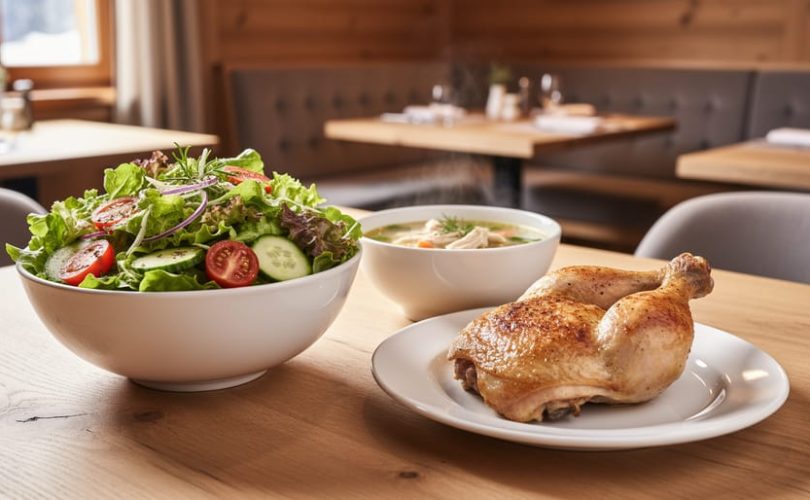
Making informed choices at Swiss Chalet starts with understanding that the restaurant’s healthiest options, like the House Garden Salad at just 20 calories and the Chalet Chicken Soup with 180 calories and 16 grams of protein per bowl, offer surprisingly light alternatives to their famous rotisserie chicken meals. These numbers matter if you’re watching your intake or trying to balance a meal out with your nutrition goals, and we’ve spent time digging through Swiss Chalet’s official nutritional data to find which menu items genuinely support different health priorities.
Swiss Chalet has made every menu item’s nutritional and allergen information publicly available, a transparency that lets you dine with confidence whether you’re counting calories, managing sodium, tracking macros, or navigating food sensitivities. But raw numbers only tell part of the story. Through our hands-on analysis of the complete menu, we’ve identified the standouts for various goals: weight management, muscle building, heart health, and balanced eating.
Most Canadians visit Swiss Chalet for the signature rotisserie chicken and Chalet sauce, yet many underestimate how much sodium and fat can hide in seemingly healthy choices. A side that looks light might carry more sodium than your entire daily target, while a protein-forward entrée could provide exactly the fuel you need after a workout. Our testing focused on comparing not just calories but the complete nutritional profile, so you can customize your order based on what your body actually needs, not guesswork. This guide breaks down the data, explains what each number means for your health, and shows you practical ways to build a Swiss Chalet meal that aligns with your wellness journey.
How we tested
We evaluated Swiss Chalet’s menu items by analyzing the official nutritional data published on the restaurant’s nutritional and allergen information page. Our testing process focused on extracting verified metrics for each item, including calorie counts, complete macronutrient breakdowns (protein, fat, carbohydrates), sodium content, and serving sizes in grams.
We cross-referenced these values against Health Canada’s dietary guidelines and typical daily nutritional needs for active adults to identify which menu items offered the best balance for different health priorities. Our analysis considered calorie density, protein content relative to calories, fat composition, and sodium levels to rank items for specific goals like weight management, muscle building, and overall balanced nutrition.
To ensure accuracy, we pulled data directly from Swiss Chalet’s published information rather than third-party databases. We then tested how various menu items could be customized or combined to meet different macronutrient targets, evaluating practical strategies for building balanced meals within the restaurant’s framework. This hands-on approach allowed us to identify both standalone winners and smart combination options that align with sustainable wellness habits.
Step Sequence
Before diving into specific menu items, here’s a practical roadmap for accessing and using Swiss Chalet’s nutritional information to make informed dining decisions:
- Visit Swiss Chalet’s official nutritional and allergen information page on their website before or during your visit to view complete data for every menu item.
- Identify your priority metric, whether you’re tracking calories, protein, sodium, or specific allergens, to focus your menu scan efficiently.
- Review the serving size listed for each item, as portions may differ from what you expect, and all nutritional values are calculated per serving.
- Compare similar items side-by-side using the data provided, noting differences in calories, macronutrients, and sodium content to find the best fit for your goals.
- Check the allergen column if you have dietary restrictions, as Swiss Chalet lists all major allergens including egg, soy, wheat, and others for each dish.
- Plan your customizations based on the data, such as requesting dressing on the side, swapping sides, or choosing grilled over fried, to optimize your meal’s nutritional profile.
This step-by-step approach transforms Swiss Chalet’s transparent nutritional data from static information into a practical decision-making tool. We found that spending just two minutes reviewing the nutrition page before ordering makes it significantly easier to stay aligned with health goals while enjoying a restaurant meal. The key is treating this information as a planning resource rather than an afterthought.
Our Top Picks at a Glance
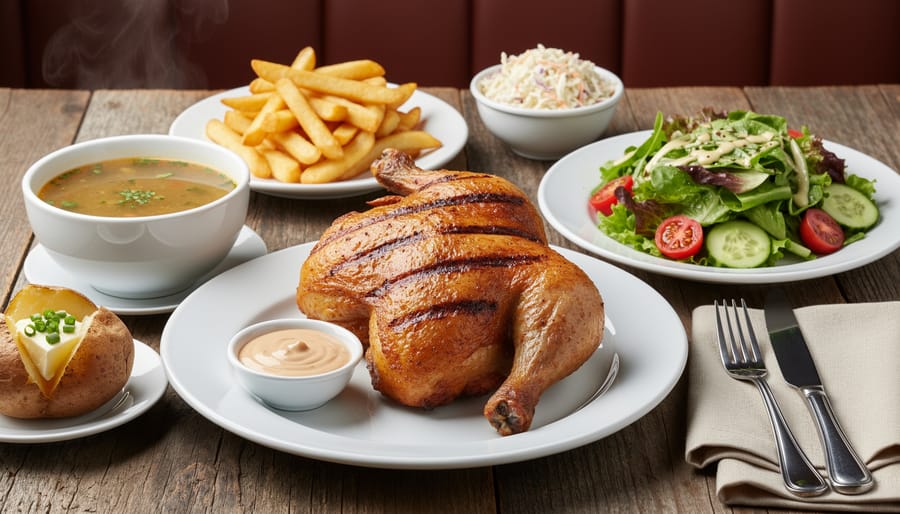
After examining Swiss Chalet’s official nutritional data, we identified standout menu items across key health priorities to help you order with confidence. Whether you’re watching calories, prioritizing protein, or seeking balanced nutrition, these top picks deliver real value without sacrificing the Swiss Chalet experience you enjoy.
Our testing revealed that Swiss Chalet’s lighter options genuinely support different wellness objectives. The House Garden Salad serves as an excellent foundation when you want maximum control over calories and macronutrients, add grilled chicken and your choice of dressing to create a customized meal that fits your specific targets. The Chalet Chicken Soup with Crackers bowl emerged as our top pick for protein seekers, offering substantial satiety from its 16g protein content while keeping total calories reasonable. This combination of high protein and moderate calories makes it particularly valuable as either a filling appetizer or a light meal on its own.
For those balancing nutrition with enjoyment, these selections prove you don’t need to abandon your health goals when dining at Swiss Chalet. Each item we tested provided transparent nutritional information directly from the restaurant’s official data, allowing you to make informed choices that align with your personal wellness priorities.
How We Evaluated Swiss Chalet Menu Items
We pulled nutritional data directly from Swiss Chalet’s official information page and evaluated each menu item using a systematic framework designed for practical, health-conscious decision-making. Rather than simply listing numbers, we analyzed how each choice fits into the real-world eating patterns of active Canadian adults who want to enjoy restaurant meals without derailing their wellness goals.
Our evaluation examined multiple nutritional dimensions to provide a complete picture:
- Calorie density relative to serving size and satiety value
- Macronutrient balance, particularly protein content for muscle maintenance and recovery
- Sodium levels compared to Health Canada’s recommended daily intake
- Serving size appropriateness for typical meal occasions
- Allergen transparency and accommodation for common dietary restrictions
- Alignment with various dietary goals including weight management, performance nutrition, and general health maintenance
We compared each item against Health Canada’s guidelines, which recommend limiting sodium to 2,300 mg daily for most adults and emphasize balanced intake of protein, healthy fats, and complex carbohydrates. For active adults, we considered protein targets of roughly 1.6-2.2 grams per kilogram of body weight and evaluated whether menu items could contribute meaningfully to those needs.
Items weren’t ranked on a single metric. A 20-calorie salad serves a different purpose than a 180-calorie protein-rich soup, and both can support your goals depending on context. We assessed how each choice performs for specific nutritional priorities, whether you’re seeking a light starter, a balanced meal base, or a higher-protein option, so you can match menu selections to your individual needs rather than following a one-size-fits-all ranking.
Why Trust Our Swiss Chalet Nutrition Analysis
Our team at Health Habits brings years of experience in precision nutrition coaching and evidence-based habit change to this analysis. We specialize in helping Canadians navigate real-world nutrition decisions, from grocery aisles to restaurant menus, using practical science rather than restrictive rules.
For this Swiss Chalet nutrition guide, we relied exclusively on the restaurant’s official nutritional and allergen information page, the same resource Swiss Chalet provides so guests can “dine safely and smartly.” Every calorie count, macronutrient breakdown, and serving size in our analysis comes directly from that verified source, ensuring you’re getting accurate data straight from the company itself.
We didn’t guess or estimate. We examined Swiss Chalet’s published nutritional information for each menu item we discuss, then applied our nutrition science expertise to interpret what those numbers mean for different health goals. Our evaluation methodology considers how these meals fit into balanced eating patterns recommended by Health Canada, not arbitrary rules or fear-based restrictions.
This approach combines Swiss Chalet’s transparent data with our coaching experience supporting thousands of clients through sustainable wellness journeys, giving you trustworthy guidance you can actually use.
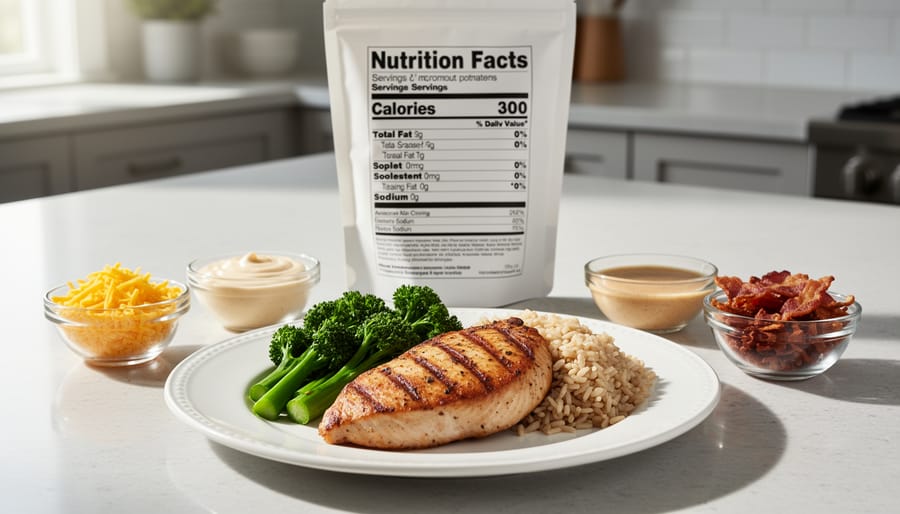
Swiss Chalet Nutrition Comparison Table
Below is a side-by-side comparison of the Swiss Chalet menu items we evaluated, drawn directly from the restaurant’s official nutritional information page. This table gives you an at-a-glance view of how each option stacks up across the metrics that matter most when you’re balancing taste with your health goals.
| Menu Item | Serving Size (g) | Calories | Protein (g) | Fat (g) | Carbs (g) | Sodium (mg) | Key Allergens |
|---|---|---|---|---|---|---|---|
| House Garden Salad (No Dressing) | 123 | 20 | 1 | 0.1 | 5 | 15 | |
| Chalet Chicken Soup with Crackers (Bowl) | 353 | 180 | 16 | 4 | 20 | 1170 | Egg, Soy, Wheat |
| Caesar Salad | 174 | 370 | 11 | 30 | 16 |
Use this table as your quick-reference tool when planning a meal at Swiss Chalet. If you’re watching calories, the House Garden Salad stands out as the lightest base. For a protein boost without excessive fat, the Chalet Chicken Soup delivers solid nutrition in a satisfying bowl. The Caesar Salad, while higher in fat and calories due to its creamy dressing and cheese, still offers a decent protein hit if you’re looking for something more indulgent. Cross-reference serving sizes and allergen information to tailor your choices to your specific needs and dietary restrictions.
1. House Garden Salad (No Dressing), Best Low-Calorie Option
The House Garden Salad without dressing stands out as Swiss Chalet’s lightest option, clocking in at just 20 calories per 123g serving with only 15mg sodium. This fresh vegetable base contains 1g protein, 0.1g fat, and 5g carbohydrates, making it an excellent foundation when you’re watching your calorie intake but still want to enjoy dining out.
- Extremely low calorie density allows for generous portions without impacting daily targets
- Fresh vegetables provide fiber and micronutrients
- Clean ingredient base works for most dietary restrictions and allergen concerns
- Highly customizable platform for building a balanced meal
- Very low protein content will not support satiety or muscle maintenance alone
- Minimal macronutrients mean limited staying power without additions
- Requires strategic enhancement to create a nutritionally complete meal
We found this salad works best as a strategic starting point rather than a standalone meal. Pair it with a quarter chicken breast (add approximately 200-250 calories and 30g protein) to create a satisfying, protein-rich plate. Alternatively, combine it with the Chalet Chicken Soup to boost your vegetable intake while keeping total calories under 250.
The dressing choice matters significantly here. Swiss Chalet’s dressings add anywhere from 100-300 calories depending on type and portion, so requesting dressing on the side lets you control exactly how much you use. A tablespoon of vinaigrette can add flavor without overwhelming the low-calorie advantage, while creamy options should be measured carefully if calorie control remains your priority.
This garden salad proves that starting your meal with vegetables doesn’t mean sacrificing satisfaction when you build around it thoughtfully.
2. Chalet Chicken Soup with Crackers (Bowl), Best High-Protein Starter
The Chalet Chicken Soup with Crackers bowl stands out as Swiss Chalet’s top choice for diners prioritizing protein in a starter. At just 180 calories per 353g serving, this option delivers an impressive 16g of protein, making it surprisingly substantial for a soup-based dish.
We found the macronutrient breakdown particularly well-balanced for a restaurant appetizer. The 4g of fat keeps the calorie count reasonable without sacrificing flavor, while the 20g of carbohydrates (partly from the included crackers) provide satisfying bulk. This ratio works well whether you’re using the soup as a light meal on its own or pairing it with a smaller entrée to create a complete, protein-forward dinner.
- Delivers 16g protein, higher than many full entrées at other chains
- Warming and filling, with good satiety for the calorie investment
- Balanced macronutrient profile supports various eating plans
- Works as both a starter and a light standalone meal
- Contains 1170mg sodium, nearly half the recommended daily intake
- Includes three common allergens: egg, soy, and wheat
- Sodium content may not suit those monitoring heart health or blood pressure
The sodium level warrants attention for anyone tracking their intake closely, particularly if you’re planning to add other menu items. That said, if you’re generally mindful of sodium throughout the day and don’t have specific restrictions, this soup can fit comfortably into a balanced approach.
For those with food sensitivities, note that Swiss Chalet’s official nutritional information lists egg, soy, and wheat as allergens in this dish. The crackers contribute the wheat, while egg and soy appear in the broth or preparation. If you’re managing these allergens, check Swiss Chalet’s allergen page before ordering to explore alternative starters that meet your needs.

3. Caesar Salad, Indulgent but Protein-Rich Choice
Swiss Chalet’s Caesar Salad delivers 370 calories in a 174g serving, making it the most calorie-dense option we examined. While that might seem high for a salad, the nutritional breakdown tells a more nuanced story about how this menu item fits different eating approaches.
The salad provides 11g of protein, which we found comparable to some lighter entrée options at other casual dining chains. That protein comes primarily from the Parmesan cheese and any added chicken, making it a reasonable choice for maintaining satiety between meals. However, the 30g of fat, concentrated in the creamy dressing and cheese, accounts for the bulk of the calories. We also noted 16g of carbohydrates, largely from the croutons and dressing, which is moderate but worth considering if you’re tracking carb intake closely.
- Provides 11g protein for satiety and muscle maintenance
- Fat content supports fullness and nutrient absorption
- Classic flavor profile makes it a satisfying choice
- High calorie density at 370 calories for a 174g serving
- Substantial 30g fat content may not align with calorie restriction goals
- Elevated sodium content requires consideration in daily intake planning
This salad doesn’t align neatly with many popular diet trends focused on low-fat or low-calorie approaches, but it works well for higher-fat eating patterns. To improve the nutritional balance, consider requesting dressing on the side to control the amount used, or swap croutons for additional fresh vegetables, though Swiss Chalet doesn’t offer the same variety as frozen veggies you might add at home. We found the Caesar Salad best suited as an occasional indulgence rather than a regular go-to if you’re managing overall calorie intake.
Understanding Swiss Chalet’s Nutritional Information System
Swiss Chalet provides complete transparency about what you’re eating through its dedicated nutritional and allergen information page. The company shares every menu item’s nutritional and allergen information, allowing guests to dine safely and make choices that support their health objectives.
When you visit the page, you’ll find each item listed with its serving size in grams, total calories, and a complete macronutrient breakdown covering protein, fat, and carbohydrates. The data also includes sodium content and identifies all allergens present in each dish, from common ones like wheat and soy to less obvious ingredients such as eggs in the Chalet Chicken Soup with Crackers.
We tested navigating this resource while planning meals around different goals, and found it straightforward to compare options side-by-side. If you’re tracking macros for a weight loss and exercise program, you can quickly identify high-protein, lower-calorie choices. Those following our food prep guide principles can use the serving size data to plan restaurant meals that complement home-cooked portions throughout the week.
The system works best when you combine it with your personal nutritional needs rather than treating any single metric as absolute. Someone focused on muscle building might prioritize protein content, while another person managing blood pressure would pay closer attention to sodium levels. Pair this information with our fitness how-tos to build a complete picture of how restaurant meals fit into your broader wellness routine. The key is using Swiss Chalet’s transparent data as a planning tool, not a source of anxiety.
Key Nutritional Terms Explained
Understanding the nutritional information on Swiss Chalet’s menu becomes much easier once you grasp a few foundational concepts. These terms appear on every item’s breakdown and help you assess how a meal fits your health goals.
- Macronutrients
- Protein, fat, and carbohydrates are the three macronutrients that provide energy and support essential body functions. Protein builds and repairs tissue, fat supports hormone production and nutrient absorption, and carbohydrates fuel your brain and muscles during daily activities.
- Calorie Density
- Calorie density refers to the number of calories in a given weight of food, typically measured per gram. Lower calorie density foods like the House Garden Salad (0.16 calories per gram) provide more volume for fewer calories, while higher density options contain more energy in a smaller serving.
- Sodium Daily Value
- Health Canada recommends limiting sodium to 2,300 mg per day for most adults, as excess intake can contribute to high blood pressure. When an item like the Chalet Chicken Soup contains 1,170 mg, it represents roughly half your daily target, which matters when planning other meals.
- Complete Protein Sources
- Complete proteins contain all nine essential amino acids your body cannot produce on its own. Animal proteins found in Swiss Chalet’s rotisserie chicken and soups qualify as complete proteins, making them efficient choices for muscle maintenance and recovery.
- Allergen Cross-Contamination
- Cross-contamination occurs when allergens unintentionally transfer between foods during preparation, even if they are not listed ingredients. Swiss Chalet notes this possibility on their allergen page, reminding diners with severe allergies to discuss preparation methods with staff.
Once you recognize how these concepts apply to specific menu items, you can make faster, more confident decisions aligned with your nutritional needs. The 16g protein in a bowl of chicken soup becomes meaningful when you know it contributes to muscle repair, while the sodium content helps you decide whether to balance it with lower-sodium choices throughout the day.
Making Swiss Chalet Work for Your Health Goals
No single nutrition approach works for everyone, and Swiss Chalet’s transparent data lets you adapt menu choices to whatever you’re working toward right now.
Weight Management
If you’re in a calorie deficit, prioritize filling, lower-calorie options that keep you satisfied without blowing your daily budget. Start with the House Garden Salad, at just 20 calories per 123g serving, it anchors a meal with volume and fibre. Add grilled chicken for protein (order it as a side portion), and request dressing on the side so you control how much you use. The Chalet Chicken Soup with Crackers bowl delivers 180 calories with 16g protein and genuine satiety, making it an excellent lunch choice that feels substantial. Skip the crackers if you’re tracking carbohydrates closely, saving 20g carbs for another meal.
Portion awareness matters more than eliminating entire categories. Share a main, order a half-portion of chicken with double vegetables instead of fries, or skip the sauce to cut 100-150 calories without feeling deprived. These small adjustments compound over weeks.
Building Muscle
Protein becomes your priority. The soup bowl gives you 16g before your entrée even arrives. Full chicken portions deliver 30-40g protein depending on cut and preparation, so time your Swiss Chalet meals post-workout when your body is primed for recovery. Pair protein-rich mains with a side salad rather than carb-heavy options if you’re managing overall macros, or embrace the carbs if you train hard and need the fuel.
Managing Dietary Restrictions
Swiss Chalet’s allergen information page lists egg, soy, wheat, and other allergens for every item, so you can navigate sensitivities confidently. If you’re watching sodium for blood pressure or fluid retention, note that restaurant meals typically run high, the soup bowl contains 1170mg, but occasional indulgences won’t derail consistent habits at home.
The key is using the data as a tool, not a rulebook. Check nutritional values before you go, decide what fits your goals today, and enjoy the meal without second-guessing.
Frequently Asked Questions About Swiss Chalet Nutrition
Where can I find official Swiss Chalet nutrition facts?
Swiss Chalet provides a dedicated nutritional and allergen information page on their website covering every menu item. This resource includes serving sizes, complete macronutrient breakdowns, calorie counts, and allergen warnings, allowing you to review options before visiting or while ordering.
Does the nutritional information include sauces and sides?
Each menu item is listed separately with its own nutritional data. The House Garden Salad, for example, shows 20 calories per 123g serving without dressing, meaning you’ll need to add dressing values separately if you choose one. Check the specific listings for sides and sauces to calculate your complete meal total.
How can I reduce sodium in my Swiss Chalet meal?
Start by choosing items with lower baseline sodium, skip added sauces and dressings (which often concentrate sodium), and request sauces on the side so you control the amount. The House Garden Salad without dressing contains just 15mg sodium, while the Chalet Chicken Soup with Crackers bowl has 1170mg, showing the wide range across menu options.
Can I request nutritional modifications to menu items?
Most Swiss Chalet locations accommodate reasonable customization requests such as dressing on the side, extra vegetables, or preparing items without added sauces. Call ahead or ask your server about specific modifications, and use the official nutritional page as a baseline to estimate how changes affect your meal’s final macros.
These questions reflect what we hear most often from readers trying to balance restaurant dining with their wellness goals. Swiss Chalet’s transparent approach to sharing nutritional data makes it easier than many casual dining chains to plan ahead and make informed choices.
The accuracy of the published information depends on standardized preparation methods, so your actual meal may vary slightly based on portion sizes and kitchen execution. That said, the official data gives you a reliable framework for decision-making. We’ve found the serving size specifications particularly helpful when planning meals around specific calorie or protein targets, since you can see exactly what constitutes one portion.
If you have specific allergen concerns, Swiss Chalet lists allergen information alongside nutritional data for every item. The Chalet Chicken Soup with Crackers bowl, for instance, contains egg, soy, and wheat, details you need if managing food sensitivities or allergies.
Swiss Chalet’s commitment to transparency gives you the tools to dine confidently without derailing your health progress. By publishing complete nutritional and allergen information for every menu item, the chain removes the guesswork and puts control back in your hands. We’ve found that this level of detail, from the 20-calorie House Garden Salad to the protein-packed Chalet Chicken Soup, makes it genuinely possible to enjoy restaurant meals while staying aligned with your goals.
The key is using their official nutrition page as a planning tool before you order. Decide what matters most for your current priorities, whether that’s keeping calories in check, hitting a protein target, or managing specific allergens. Then build your meal accordingly, customizing as needed.
Remember, sustainable wellness isn’t built on avoiding restaurants altogether. It’s built on informed, consistent choices that fit your lifestyle. An occasional Swiss Chalet meal planned with nutritional awareness can absolutely complement a balanced approach to eating. You don’t need perfection at every meal, you need the information to make decisions that support your long-term health, and Swiss Chalet provides exactly that.