
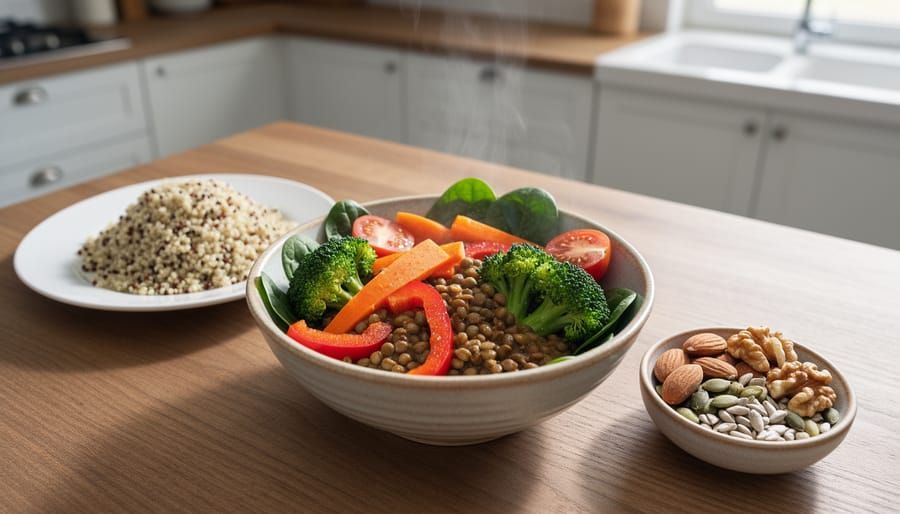
A weight loss plan vegetarian is a structured eating approach that leverages plant-based foods to create a caloric deficit while meeting nutritional needs, typically emphasizing whole grains, legumes, vegetables, fruits, nuts, and seeds while excluding meat, poultry, and fish.
For the millions of Canadians following or considering a vegetarian lifestyle, weight management doesn’t require abandoning plant-based principles. The connection between vegetarian eating and weight loss is backed by substantial research: studies consistently show that vegetarians tend to have lower body weights and BMIs compared to meat-eaters, largely because plant-based diets are naturally rich in fiber, lower in calorie density, and packed with nutrients that support metabolic health. But simply cutting out animal products doesn’t guarantee results. Success depends on building a thoughtful plan that balances protein intake, manages portion sizes, and avoids the trap of relying on processed vegetarian convenience foods that can sabotage your goals.
This guide breaks down exactly how vegetarian eating facilitates weight loss at a biological level, walks you through the different approaches you can take (from lacto-ovo to vegan variations), and provides practical frameworks for building satisfying meals that keep you full while creating the deficit needed for fat loss. You’ll learn how to troubleshoot common obstacles like protein concerns, eating out, and managing cravings, all while maintaining the energy and nutrition your body needs. Whether you’re a long-time vegetarian looking to shed pounds or exploring plant-based eating as a weight-loss strategy, understanding these mechanics puts you in control of sustainable results.
What a Vegetarian Weight Loss Plan Means
A vegetarian weight loss plan centres on reducing body weight while eating primarily plant-based foods and eliminating meat, poultry, and seafood. Unlike restrictive fad diets, this approach emphasizes whole, minimally processed foods, vegetables, fruits, legumes, whole grains, nuts, seeds, and often eggs and dairy, to create a calorie deficit while maintaining nutritional balance.
The key distinction lies in what you include rather than what you remove. Most vegetarian weight loss plans follow a lacto-ovo pattern, meaning dairy products and eggs remain on the table alongside plant foods. This flexibility makes it easier to meet protein needs and enjoy familiar foods while still benefiting from the high fiber and nutrient density of plants.
- Vegetarian
- An eating pattern that excludes meat, poultry, and seafood but may include eggs, dairy, and honey. It focuses on plant-based foods as the foundation of meals.
- Lacto-ovo vegetarian
- The most common vegetarian approach that includes both dairy products (lacto) and eggs (ovo) alongside plant foods. This variation provides the broadest range of protein sources.
- Pescatarian
- A pattern that includes fish and seafood but excludes other meats. While technically not vegetarian, it’s often grouped with plant-forward diets.
- Whole foods plant-based
- An approach emphasizing minimally processed plant foods while typically excluding animal products and refined ingredients. It overlaps with vegan eating but focuses more on food quality than animal welfare.
- Caloric deficit
- The condition where you consume fewer calories than your body burns, forcing it to use stored fat for energy. This is the fundamental requirement for weight loss on any plan.
A vegan plan goes further, excluding all animal products including dairy, eggs, and honey. A flexitarian approach, meanwhile, allows occasional meat or fish while maintaining a primarily vegetarian base, think of it as vegetarian-most-of-the-time rather than vegetarian-always.
What makes vegetarian eating particularly effective for weight management isn’t magic or metabolism tricks. Plant foods tend to be less calorie-dense than animal products, meaning you can eat satisfying portions while naturally consuming fewer calories. The high fiber content promotes fullness, and when you build meals around vegetables, legumes, and whole grains, you’re also loading up on vitamins, minerals, and phytonutrients that support overall health during weight loss.
How a Vegetarian Weight Loss Plan Works
The Role of Fiber and Nutrient Density
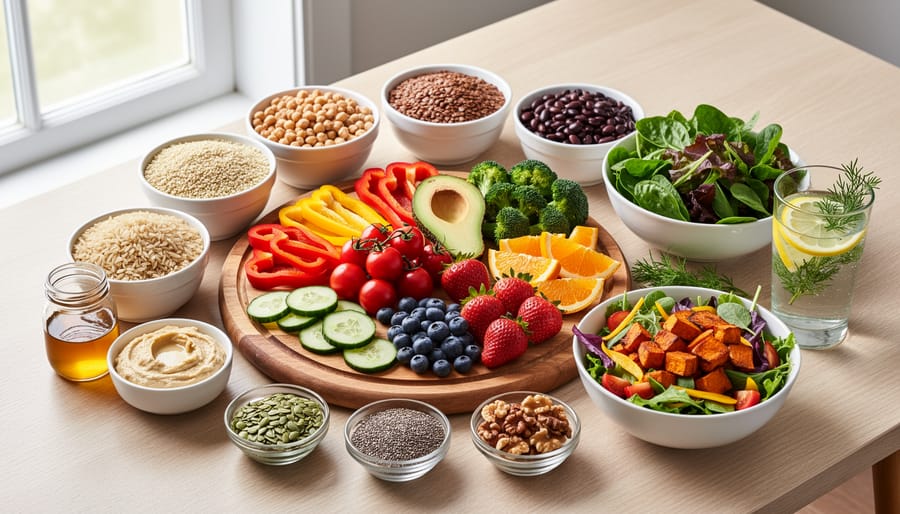
Vegetarian diets naturally deliver substantial amounts of fiber, and this single nutrient plays an outsized role in weight management. Fiber supports satiety by slowing gastric emptying, meaning your stomach takes longer to signal hunger after a meal. When you eat a bowl of lentil soup or a plate of roasted vegetables, the fiber physically expands in your digestive tract, triggering stretch receptors that communicate fullness to your brain. This mechanical process happens before your body absorbs calories, giving you a head start on portion control without conscious restriction.
Beyond satiety, fiber reduces the caloric density of meals. A cup of beans provides around 225 calories along with 15 grams of fiber and substantial protein, while a cup of cooked ground beef delivers 340 calories with zero fiber. You can eat a larger volume of food for fewer calories, which matters when you’re trying to create a deficit without feeling deprived. Fiber also moderates blood sugar spikes by slowing carbohydrate absorption, preventing the energy crashes that drive cravings an hour after eating.
Nutrient density compounds these advantages. Whole plant foods pack vitamins, minerals, and phytonutrients into relatively few calories. A serving of kale or bell peppers delivers potassium, vitamin C, and folate without the energy load of calorie-dense processed foods. When your body receives adequate micronutrients, metabolic processes function efficiently and hunger signals normalize, making it easier to maintain a calorie deficit without triggering compensatory eating driven by nutritional gaps.
Meeting Protein and Nutrient Needs
A common worry when shifting to vegetarian eating is whether you’ll get enough protein and essential nutrients. The short answer: yes, but it requires some attention.
Protein needs for weight loss typically range from 1.2 to 1.6 grams per kilogram of body weight. Vegetarians can hit these targets by combining complementary plant proteins throughout the day, think beans with rice, hummus with whole grain pita, or lentil curry with quinoa. You don’t need to pair them in the same meal; your body pools amino acids over 24 hours. Adding dairy or eggs makes this even easier, providing complete proteins with minimal effort. For those using supplements, protein timing around workouts can optimize muscle preservation during weight loss.
Beyond protein, three nutrients deserve strategic planning. Iron from plants (non-heme iron) absorbs better when paired with vitamin C, squeeze lemon on your spinach salad or eat oranges with your fortified cereal. Vitamin B12 doesn’t naturally occur in plant foods, so vegetarians should consume fortified foods daily or take a B12 supplement. Omega-3 fatty acids come from flaxseeds, chia seeds, walnuts, and algae-based supplements, though the conversion rate from plant sources is lower than from fish.
A well-planned vegetarian diet meets all these needs without guesswork. Consider tracking your intake for a week initially to identify any gaps, then adjust your food choices accordingly.
Types of Vegetarian Weight Loss Approaches
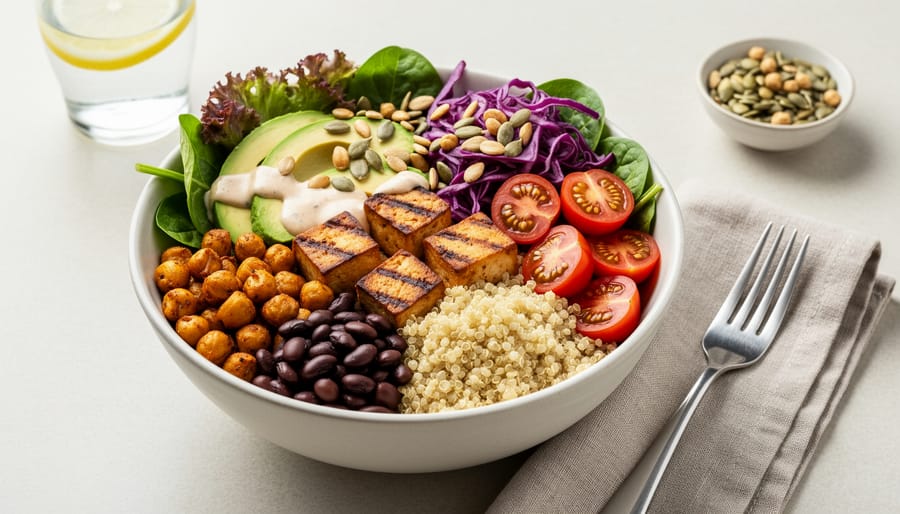
Not all vegetarian diets look the same, and the variation you choose can affect both your weight loss results and how easily you stick with the plan. Understanding the main types helps you select an approach that matches your food preferences, nutritional needs, and daily routine.
Lacto-ovo vegetarian is the most common approach. You eliminate meat, poultry, and fish but keep dairy products and eggs. This offers the most flexibility for meeting protein needs since you can rely on Greek yogurt, cottage cheese, eggs, and milk alongside plant proteins like beans and tofu. It’s often the easiest transition for people new to vegetarian eating because familiar foods like omelets, cheese-based dishes, and yogurt parfaits remain options. The variety makes it simpler to hit your protein targets without extensive meal planning.
Lacto-vegetarian removes eggs but keeps dairy. This pattern is traditional in many Indian cuisines and works well if eggs don’t appeal to you or cause digestive issues. You’ll lean more heavily on dairy for quick protein sources, which means paying attention to portion sizes since full-fat dairy can add calories quickly. Paneer, milk-based smoothies, and yogurt become staples. The trade-off is you lose the convenience of eggs as a breakfast protein or binding agent in recipes.
Ovo-vegetarian does the opposite, keeping eggs but eliminating dairy. This suits people with lactose intolerance or those who want to reduce saturated fat from cheese and milk. Eggs become your primary animal-based protein, so you’ll likely eat them daily in various forms. You’ll rely more on plant milks, nutritional yeast for cheesy flavor, and legumes to fill the gaps dairy would normally occupy.
Mediterranean-vegetarian hybrid blends vegetarian eating with Mediterranean diet principles: emphasis on olive oil, nuts, whole grains, and abundant vegetables, with optional small amounts of fish or seafood for omega-3s. Some consider this pescatarian rather than strictly vegetarian, but it offers a middle ground if you want plant-focused eating with occasional seafood for nutrient insurance. The healthy fats and varied plant foods make it particularly sustainable long-term.
Your best choice depends on your current eating habits, any food intolerances, and which animal products you actually enjoy. Someone who dislikes eggs won’t succeed on an ovo-vegetarian plan, just as dairy-free preference makes lacto-vegetarian impractical.
Building Your Vegetarian Weight Loss Plan
Daily Calorie and Macronutrient Targets
Finding your calorie target starts with your maintenance needs, the amount your body burns daily. A reasonable deficit for steady weight loss is 300 to 500 calories below maintenance, which typically translates to losing half a pound to one pound per week. For most adults, this lands between 1,500 and 2,000 calories daily, though active individuals or those with higher muscle mass may need more.
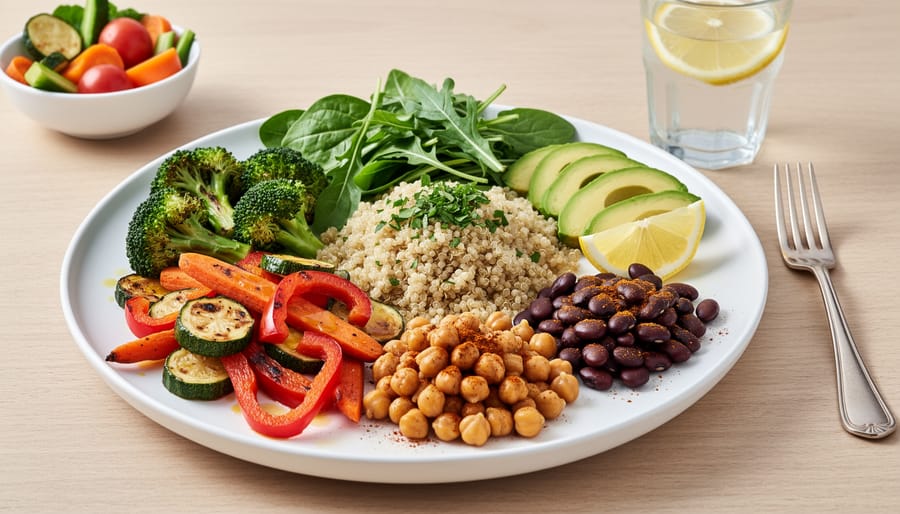
Macronutrient distribution matters as much as total calories. Aim for 20 to 30 percent of calories from protein, 45 to 55 percent from carbohydrates, and 25 to 30 percent from fat. On a 1,800-calorie plan, that means roughly 90 to 135 grams of protein, 200 to 250 grams of carbs, and 50 to 60 grams of fat. Prioritize whole food protein sources like lentils, chickpeas, tofu, tempeh, Greek yogurt, and eggs rather than relying heavily on protein bars or meat substitutes.
The biggest pitfall is filling your plate with processed vegetarian convenience foods, veggie burgers, mock meats, and packaged snacks, that often carry excess sodium, refined oils, and hidden calories without substantial nutrients. These can stall progress despite technically fitting a vegetarian framework. Center your meals around whole plants, use processed options sparingly, and you’ll hit your targets while actually feeling satisfied. Track your intake for the first week or two to calibrate portions, then adjust based on how your body responds.
Sample Meal Structure
A practical day on a vegetarian weight loss plan balances protein, fiber, and essential nutrients across four eating occasions while keeping you satisfied between meals.
Start your morning with a high-protein foundation: Greek yogurt topped with berries, ground flaxseed, and a handful of almonds delivers roughly 20 grams of protein and sets a steady energy baseline. If you prefer savoury breakfasts, scrambled eggs with spinach, tomatoes, and whole-grain toast works equally well. Both options provide sustained fullness without excess calories.
Lunch builds on fibre and volume. A large mixed-green salad with chickpeas, quinoa, roasted vegetables, pumpkin seeds, and a tahini-lemon dressing creates a nutrient-dense, filling meal under 400 calories. Adding sliced avocado increases healthy fats that slow digestion. The chickpeas supply plant protein and iron, while the greens and vegetables contribute vitamins and minerals often limited in lower-calorie plans.
Dinner centres on a complete protein source paired with vegetables. Lentil curry over cauliflower rice, baked tofu stir-fry with broccoli and bell peppers, or black bean tacos with salsa and Greek yogurt all deliver 15-25 grams of protein per serving. These meals emphasize whole foods over processed meat alternatives, which can hide excess sodium and additives.
Strategic snacking prevents energy crashes and binge eating later. Mid-morning, pair an apple with almond butter for balanced macros. Afternoon options include raw vegetables with hummus, cucumber nutrition offers hydration and crunch with minimal calories. A small smoothie made from spinach, frozen berries, and protein powder works for post-workout recovery, though understanding banana nutrition helps you decide whether to include one based on your carbohydrate targets.
This structure typically lands between 1,400-1,800 calories depending on portions and your specific needs, with 80-100 grams of protein distributed throughout the day.
Benefits Beyond the Scale

A vegetarian weight loss plan delivers advantages that extend well beyond the number on your scale. These broader benefits often become the real reasons people stick with plant-based eating long after reaching their initial weight goals.
Your digestive system typically functions more smoothly on a vegetarian diet. The higher fiber intake, often 25 to 40 grams daily compared to the average 15 grams most Canadians consume, promotes regular bowel movements and feeds beneficial gut bacteria. Many people notice reduced bloating and more consistent energy levels within weeks of increasing plant foods.
Blood sugar control improves substantially for most vegetarians. Plant-based meals generally have a lower glycemic load than meat-centered ones, leading to steadier glucose levels throughout the day. This translates to fewer energy crashes, reduced cravings, and better insulin sensitivity. For those at risk of type 2 diabetes, these metabolic improvements can be particularly significant.
Your cardiovascular health benefits from reduced saturated fat intake and increased consumption of heart-protective compounds found in plants. Studies consistently show vegetarians have lower blood pressure, improved cholesterol profiles, and reduced risk of heart disease compared to meat-eaters, benefits that compound over years of following the pattern.
The environmental dimension matters to many who adopt this approach. Plant-based eating typically requires less water, land, and energy while producing fewer greenhouse gas emissions than diets heavy in animal products. Knowing your food choices align with your values creates psychological satisfaction that supports long-term adherence.
These cumulative benefits create a positive feedback loop: you feel better physically, your health markers improve, and your choices reflect your broader values. This multifaceted reward system makes a vegetarian weight loss plan far easier to sustain than approaches focused solely on calorie restriction.
Common Challenges and How to Navigate Them
Switching to a vegetarian weight loss plan often surfaces challenges that can derail your progress if you’re not prepared. The good news? Most obstacles have straightforward solutions once you know what to expect.
Dining out ranks among the most common hurdles. Many restaurants still default to pasta-heavy vegetarian options that don’t support your goals. Call ahead to review menus, or check online before you go. When you arrive, don’t hesitate to ask for modifications: grilled vegetables instead of fries, dressing on the side, or double portions of beans to replace meat. Most kitchens accommodate these requests without issue.
Social situations present a different test. Friends and family may question your choices or pressure you to “just have a little.” Keep your response simple and confident: “I’m focusing on plant-based eating right now, and it’s working really well for me.” Offer to bring a substantial vegetarian dish to gatherings so you know you’ll have something filling to eat.
Protein anxiety affects nearly everyone at first. You might worry you’re not getting enough, especially after workouts. Build each meal around a protein source, lentils, tofu, tempeh, edamame, Greek yogurt, or eggs, and you’ll easily hit your targets. Tracking for just a few days often reveals you’re getting more protein than you thought.
Nutrient deficiencies creep up slowly. B12 deserves particular attention since it’s only reliably found in fortified foods or supplements. Iron absorption improves when you pair plant sources with vitamin C, so add bell peppers to your spinach salad or tomatoes to your lentil soup.
Cravings for old favorites can strike hard in the first few weeks. Rather than white-knuckling through them, find satisfying vegetarian versions. Missing burgers? Try a well-seasoned black bean patty. Craving creamy pasta? Nutritional yeast and cashew cream deliver richness without derailing your calorie targets.
Diet fatigue sets in when meals become repetitive. Rotate through different cuisines, Indian dal one night, Mexican bean bowls the next, Mediterranean chickpea dishes after that. Variety keeps both your palate and your motivation fresh.
Frequently Asked Questions
Can I build muscle on a vegetarian weight loss plan?
Yes, you can build and maintain muscle while losing weight on a vegetarian diet by prioritizing protein-rich plant foods like lentils, tofu, tempeh, Greek yogurt, and cottage cheese. Aim for 1.6-2.2 grams of protein per kilogram of body weight daily, spread across meals, and pair your nutrition plan with consistent resistance training.
How fast can I expect to lose weight on a vegetarian plan?
A safe and sustainable rate is 0.5-1 kilogram per week, which translates to a daily calorie deficit of 500-750 calories. Faster loss often leads to muscle loss and makes it harder to maintain results long-term, so patience with the process yields better outcomes.
Do I need to take supplements on a vegetarian weight loss plan?
Most people benefit from vitamin B12 supplementation since it’s primarily found in animal products, and many Canadians should consider vitamin D year-round. If you’re not eating fortified foods regularly, you might also need iron, omega-3s (from algae-based sources), and zinc, but a blood test can confirm your specific needs rather than guessing.
Is a vegetarian weight loss plan safe for long-term use?
A well-planned vegetarian diet is safe and healthy for life when it includes diverse protein sources, plenty of vegetables, whole grains, and attention to key nutrients like B12, iron, and omega-3s. The pattern has been studied extensively and linked to lower risks of heart disease, type 2 diabetes, and certain cancers when maintained properly.
What if I’m following the plan but not losing weight?
Common culprits include underestimating portion sizes (especially with calorie-dense foods like nuts, oils, and cheese), relying too heavily on processed vegetarian products, or not eating enough protein to support satiety. Track your intake honestly for a week, ensure you’re in a true calorie deficit, and consider whether stress or sleep issues might be affecting your hormones.
Will I feel hungry all the time on a vegetarian weight loss plan?
Not if you structure meals around high-fiber, high-protein foods that promote fullness. Legumes, vegetables, fruits, and whole grains provide volume and satiety without excessive calories, so you can eat satisfying portions while staying in a deficit. If hunger is constant, you might need to increase protein or fiber at meals, or your calorie target may be too aggressive for your activity level.
These questions reflect the real concerns people have when they’re deciding whether a vegetarian approach fits their goals. The answers aim to be practical and reassuring without glossing over the need for intentional planning, which separates successful weight loss from frustration.
One overlooked factor in maintaining any eating pattern long-term is making the process enjoyable rather than purely disciplined. Some people find that incorporating elements of play and education into their wellness routine, much like health games do for younger learners, helps them stay engaged with meal planning and tracking without it feeling like a chore. Whether that means experimenting with new plant-based recipes each week, setting small challenges for yourself, or using apps that gamify progress, finding ways to stay curious and motivated matters as much as the nutritional strategy itself.
A vegetarian weight loss plan offers a practical, science-backed approach to reaching your goals while nourishing your body with nutrient-dense plant foods. When you focus on whole grains, legumes, vegetables, fruits, and healthy fats, and ensure you’re meeting your protein and micronutrient needs, this way of eating becomes sustainable rather than restrictive.
The key is personalization. Your calorie targets, macronutrient balance, and meal structure should reflect your activity level, health status, and food preferences. What works for someone training for a marathon won’t look the same as what supports a desk worker’s weight loss journey.
Remember that lasting results come from building consistent habits, not chasing dramatic transformations. Small, incremental changes, like adding a serving of vegetables to each meal or planning your protein sources ahead, compound over time into meaningful progress.
If you’re unsure where to start or have specific health concerns, working with a registered dietitian can help you create a plan that’s both effective and enjoyable. They’ll ensure you’re getting adequate nutrients while moving toward your weight loss goals in a way that fits your life, not the other way around.