

Choline is an essential nutrient that powers your brain, liver, and cellular function by building acetylcholine (a key neurotransmitter), maintaining cell membranes, and supporting fat metabolism throughout your body. Choline bitartrate delivers this nutrient in a highly stable, water-soluble supplement form that combines choline with tartaric acid to improve absorption and shelf life, making it one of the most accessible and affordable ways to meet your daily choline needs if diet alone falls short.
Most adults in Canada don’t get enough choline from food. The shortfall isn’t dramatic, but it’s persistent. Eggs, beef liver, and salmon are rich sources, yet many eating patterns skip these foods regularly. That’s where supplementation becomes practical. Choline bitartrate offers roughly 41% elemental choline by weight, which means a 500 mg dose provides about 205 mg of actual choline, a meaningful contribution toward the recommended 425 to 550 mg daily intake for adults.
Understanding what choline does in your body and how choline bitartrate fits into your supplement routine helps you make an informed choice tailored to your health goals, whether you’re supporting cognitive performance, liver health during weight loss, or prenatal nutrition.
What Choline Is and Why Your Body Needs It

Choline is an essential nutrient your body needs but can’t produce in adequate amounts on its own. While technically not a vitamin, it functions like one, playing critical roles in building cell membranes, producing neurotransmitters, and regulating gene expression. Your liver makes small quantities of choline, but you must get the majority through food or supplements to meet daily requirements, around 425 mg for women and 550 mg for men.
In your brain, choline converts into acetylcholine, a neurotransmitter essential for memory, mood, muscle control, and other nervous system functions. Without sufficient choline, communication between brain cells slows, potentially affecting cognitive performance and mental clarity. Research links adequate choline intake to better memory function and reduced risk of cognitive decline as you age.
Choline also keeps your liver healthy by facilitating fat metabolism and preventing fatty deposits from accumulating in liver tissue. It works with nutrients like folate and vitamin B12 in a process called methylation, which supports DNA synthesis, detoxification, and cellular repair throughout your body. During pregnancy, choline becomes even more crucial, it influences fetal brain development and may reduce the risk of neural tube defects.
Most Canadians get choline from eggs, meat, fish, dairy, and certain vegetables like broccoli and frozen veggies. A single large egg provides about 147 mg of choline, making it one of the richest food sources. However, many people fall short of recommended intake levels, especially those following plant-based diets or those with increased needs during pregnancy and lactation.
When dietary sources don’t provide enough, supplemental forms like choline bitartrate offer a practical solution. Dietary choline from food undergoes digestion and absorption in your gut, while supplement forms deliver concentrated doses designed for specific health goals or to correct deficiencies.
Understanding Choline Bitartrate and Other Forms

Choline bitartrate is choline combined with tartaric acid, a compound derived from grapes that increases the supplement’s stability and shelf life. The tartaric acid portion doesn’t offer nutritional value, it simply serves as a delivery vehicle. When you take choline bitartrate, your digestive system separates the choline from the tartaric acid, absorbing the choline into your bloodstream. This form typically contains about 41% choline by weight, meaning a 500 mg capsule provides roughly 205 mg of actual choline.
The supplement market offers several choline forms, each with distinct characteristics. Choline bitartrate is the most economical and widely available option, making it a practical starting point for most people. It absorbs reasonably well and provides choline for all the functions your body needs, from building cell membranes to producing acetylcholine.
CDP-choline, also called citicoline, combines choline with cytidine. This form crosses the blood-brain barrier more efficiently than bitartrate, which makes it popular for cognitive support. Your brain can use both the choline and cytidine components. Alpha-GPC (alpha-glycerophosphocholine) is another highly bioavailable form that delivers more choline per dose and reaches the brain readily. Phosphatidylcholine, found naturally in foods like eggs and soybeans, contains choline within a phospholipid structure that supports cell membrane health directly.
| Form | Bioavailability | Typical Daily Dose | Cost | Best Use |
|---|---|---|---|---|
| Choline Bitartrate | Moderate | 250-500 mg | Low | General health, liver support, cost-conscious users |
| CDP-Choline | High | 250-500 mg | Moderate-High | Cognitive enhancement, focus, neuroprotection |
| Alpha-GPC | Very High | 300-600 mg | High | Athletic performance, memory, acute cognitive demands |
| Phosphatidylcholine | Moderate-High | 1-3 grams | Moderate | Cell membrane health, comprehensive phospholipid support |
For most people looking to address a general choline deficiency or support baseline liver and metabolic function, choline bitartrate delivers solid results without the premium price tag. You’ll get adequate absorption and all the essential benefits of choline supplementation. The higher-end forms make sense when you have specific cognitive goals, need rapid brain uptake, or have tried bitartrate without noticing the effects you want. Starting with bitartrate lets you establish whether choline supplementation helps you before investing in more expensive options.
Who Should Consider Choline Supplementation
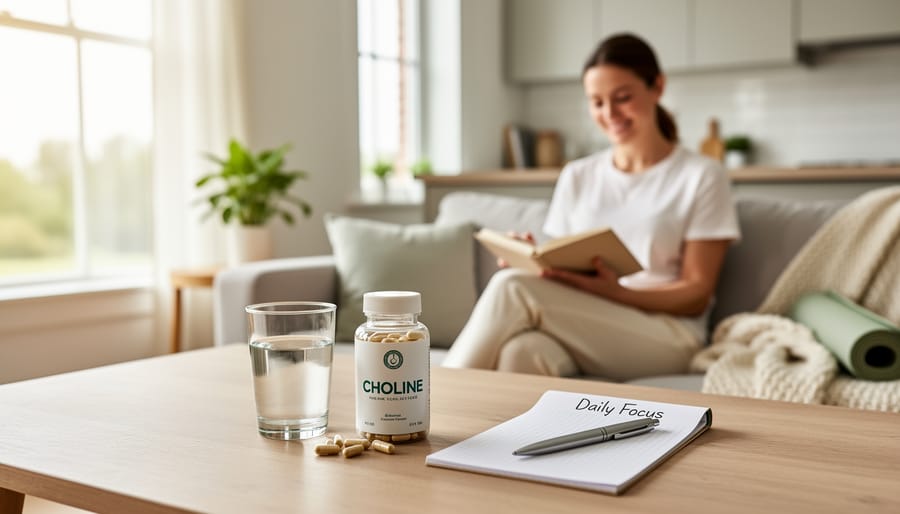
Most adults eating a varied diet meet baseline choline needs, but certain circumstances increase requirements beyond what food alone easily provides. If you fall into one of these groups, choline bitartrate may offer meaningful support:
- Pregnant and breastfeeding individuals, choline demands spike during fetal brain development and milk production, rising from 425 mg to 550 mg daily
- Endurance athletes and high-intensity trainers, exercise depletes choline stores as the body uses it to synthesize acetylcholine for muscle contraction
- People following vegetarian or vegan diets, choline concentrates in eggs, meat, and fish, making plant-based eaters more vulnerable to shortfalls
- Those with MTHFR or PEMT gene variations, these polymorphisms impair the body’s ability to produce choline endogenously, raising dietary needs
- Individuals concerned about liver health, choline prevents fat accumulation in the liver, and deficiency contributes to non-alcoholic fatty liver disease
The adequate intake level for adult men is 550 mg daily, and for adult women, 425 mg. Many Canadians fall short, averaging closer to 300 mg from food. A single egg provides about 147 mg, so even two eggs daily leaves a gap. If you’re tracking intake through a food prep guide calculate your choline consumption over several days to see where you stand.
Supplementation makes sense when dietary intake consistently misses the mark or when your circumstances create elevated needs. Cognitive decline, memory lapses, and persistent brain fog can signal inadequate choline, though these symptoms overlap with many conditions. Anyone managing fatty liver, metabolic syndrome, or a family history of neurodegenerative disease should discuss choline status with a healthcare provider before self-supplementing.
The goal is meeting needs through food first, then supplementing the difference rather than replacing whole food sources. Choline bitartrate fills that gap efficiently for most people without the higher cost of advanced forms.
How to Incorporate Choline Bitartrate Into Your Routine

Start by reviewing what you’re already eating. Track your typical meals for three to five days, then calculate your daily choline intake using a nutrition app or food database. If you’re consistently hitting 400-550 mg daily from foods like eggs, salmon, chicken, beef liver, and soybeans, supplementation may not be necessary. Most people, however, fall short, especially those following plant-based diets or avoiding animal products.
Once you’ve identified a gap, choose a quality choline bitartrate product. Look for supplements from manufacturers that follow Good Manufacturing Practices and provide third-party testing certificates. Check the label for choline content per capsule or serving, not just the weight of choline bitartrate compound. A 500 mg capsule of choline bitartrate typically delivers around 200 mg of elemental choline.
Begin with a conservative dose. Start at 250 mg of elemental choline daily for the first week, even if your dietary assessment suggests you need more. This allows your body to adjust and helps you identify any sensitivity. Take it with food to minimize digestive discomfort and improve absorption. Morning or early afternoon works well for most people, since choline can support alertness and focus.
Monitor your response carefully. Keep notes on energy levels, mental clarity, digestive comfort, and any changes you notice in workout recovery if you’re using choline bitartrate for metabolism support or performance enhancement. Some people notice subtle improvements within a few days, while others require several weeks of consistent use.
After the first week, adjust your dosage based on your response and goals. If you tolerate the initial dose well and haven’t reached your target intake, increase to 500 mg daily. You can split this into two smaller doses if preferred. Athletes and those with higher needs may go up to 1,000 mg, but stay well below the upper limit of 3,500 mg daily to avoid side effects.
Pair your supplementation with attention to your broader wellness approach. Choline works best as part of a complete strategy that includes adequate protein, healthy fats, regular physical activity, and proper hydration. If you’re working with a coach or dietitian on your exercise and nutrition plan, share your supplementation details so they can help integrate choline appropriately into your overall regimen.
Reassess every few months. As your diet evolves or your needs change, your supplementation requirements may shift. Stay flexible and responsive to what your body tells you.
What to Expect: Benefits and Possible Side Effects
Starting choline bitartrate means understanding both what it can do and your responsibility to use it thoughtfully. Research supports modest but meaningful benefits in specific areas, though effects vary by individual baseline and health status.
Cognitive function often shows the most noticeable improvement. Many users report better memory recall, clearer thinking, and improved focus, especially during mentally demanding tasks. These changes make sense given choline’s role in acetylcholine production, though they’re typically subtle rather than dramatic, think sharper concentration during work sessions rather than a complete mental transformation. For some, better cognitive clarity also supports broader mental health support as part of an integrated wellness approach.
Liver health represents another validated benefit. Choline helps prevent fat accumulation in the liver, and supplementation may support liver function markers in people with nonalcoholic fatty liver disease or those at risk due to diet or metabolic factors. Athletes sometimes notice improved endurance and reduced fatigue, likely tied to choline’s role in cell membrane function and neuromuscular signaling.
Your responsibility is sticking to appropriate doses and watching for side effects. At standard supplemental doses (250-500 mg), most people tolerate choline bitartrate well. However, some experience a fishy body odor caused by excess trimethylamine production, digestive upset including nausea or diarrhea, or increased sweating. These effects usually indicate you’re taking too much or absorbing it poorly.
Start conservatively and increase gradually only if needed. If side effects appear, reduce your dose or split it across the day. Exceeding safe limits creates unnecessary risk without additional benefit, so respecting dosage guidelines protects both your health and your investment in this supplement.
Where to Get Professional Guidance and Support
While choline bitartrate is widely available over the counter, getting personalized guidance ensures you use it safely and effectively within your broader health context. Several qualified professionals can help you determine whether choline supplementation makes sense for your situation, assess your dietary intake, review relevant genetic factors, and integrate choline into a comprehensive wellness plan.
Consider consulting:
- Registered dietitians who can analyze your current diet, calculate your choline intake from food sources, and identify any gaps that supplementation might address
- Naturopathic doctors who take an integrative approach to supplement recommendations, considering how choline fits with other nutrients and your overall health goals
- Family physicians who can review medical concerns, medications, or conditions that might interact with choline supplementation or indicate a greater need
- Precision nutrition coaches who specialize in translating supplement science into practical daily habits and monitoring your response over time
If you have access to genetic testing results, professionals familiar with nutrigenomics can interpret variants in genes like PEMT and MTHFR that affect your choline needs. This personalized approach prevents both deficiency and excessive intake.
Health Habits offers coaching services that include supplement guidance as part of broader nutrition and lifestyle support. A qualified coach can help you assess whether choline bitartrate aligns with your goals, establish a starting protocol, track your response, and adjust as needed, ensuring supplementation serves your health rather than becoming another isolated intervention.
Professional guidance is especially valuable if you’re pregnant, managing a health condition, taking multiple supplements, or simply want confidence that you’re making informed choices based on your unique physiology rather than generic recommendations.
Who Qualifies and What You Need
Unlike government programs or clinical trials, choline bitartrate supplementation doesn’t have formal eligibility criteria, it’s available over-the-counter to anyone seeking nutritional support. However, certain conditions and circumstances make supplementation more relevant and beneficial.
You’re a stronger candidate for choline supplementation if you’re pregnant or nursing (choline demands increase significantly), follow a vegan or vegetarian diet with limited egg and meat intake, have known genetic variations affecting choline metabolism (MTHFR or PEMT polymorphisms), experience cognitive decline or memory concerns, have non-alcoholic fatty liver disease, or engage in intense athletic training.
Before starting supplementation, gather a few pieces of information. First, assess your typical dietary choline intake by tracking a few days of eating, eggs, beef liver, salmon, and soybeans are top sources. Second, review any genetic testing results you may have from services like 23andMe that reveal MTHFR or PEMT status. Third, note any medications you take, particularly acetylcholinesterase inhibitors used for dementia, as choline may interact with these drugs.
If you have liver disease, neurological conditions, or take prescription medications, consult your healthcare provider before adding choline bitartrate. They may want recent blood work or health records to make an informed recommendation.
How to Apply or Complete the Process
Starting choline bitartrate supplementation doesn’t require paperwork or formal approval. The process is straightforward: evaluate, select, and begin.
First, assess your current choline intake from food. Track what you eat for three to five days, noting choline-rich sources like eggs, liver, fish, and cruciferous vegetables. Compare your intake to the adequate intake level, 550 mg daily for men, 425 mg for women, 450 mg during pregnancy, and 550 mg while breastfeeding.
Next, choose a quality supplement. Look for products from manufacturers that follow Good Manufacturing Practices and ideally have third-party testing (USP, NSF, or ConsumerLab verification). Read labels carefully to confirm the choline content per serving, many products contain 250-500 mg of choline bitartrate.
Start with a conservative dose, typically 250 mg once daily with food. This minimizes digestive discomfort and lets you gauge your response. After one to two weeks, you can increase to 500 mg if needed and tolerated.
Keep a simple log noting the dose, timing, and any changes you notice, energy levels, mental clarity, digestive effects. This record helps you and your healthcare provider evaluate whether the supplement serves your goals.
Common Questions About Choline and Choline Bitartrate
Can I get enough choline from food alone?
Many people can meet their choline needs through diet if they consistently eat eggs, liver, salmon, chicken, or soybeans. However, surveys suggest a significant portion of adults fall short of the adequate intake level, making supplementation worth considering if your diet lacks these foods.
Is choline bitartrate safe during pregnancy?
Choline is crucial during pregnancy for fetal brain development, and supplementation is generally considered safe within recommended limits. Pregnant individuals should aim for 450 mg daily and consult their healthcare provider before starting any supplement, as individual needs may vary.
How long does it take to notice effects from choline bitartrate?
Some people report sharper focus or better mental clarity within a few days, while benefits related to liver function or exercise recovery may take several weeks of consistent use to become apparent. Response varies based on your baseline choline status and dosage.
Can choline help with workout recovery?
Choline supports muscle function and may help reduce exercise-induced muscle damage markers in some athletes. While research is still emerging, many active individuals find it supports their training when combined with adequate protein and overall nutrition.
Should I cycle on and off choline supplements?
There’s no need to cycle choline bitartrate the way you might with certain performance enhancers. Since choline is an essential nutrient your body needs daily, consistent supplementation makes more sense than cycling, provided you stay within safe dosage ranges.
What’s the difference between choline bitartrate and the choline in food?
Dietary choline appears in various forms like phosphatidylcholine and glycerophosphocholine, which your body breaks down to release free choline. Choline bitartrate delivers choline in a readily absorbable supplemental form, though it may be slightly less bioavailable than some food sources or premium supplement forms like alpha-GPC.
If you’re still uncertain whether choline supplementation fits your situation, tracking your typical diet for a few days can reveal whether you’re getting close to the 425-550 mg daily target from food. A registered dietitian can assess your intake patterns and help you decide if adding choline bitartrate makes practical sense, or if adjusting your meal choices would be simpler and just as effective.
Choline supports critical functions in your brain, liver, and cells throughout your body. Whether you’re getting it from eggs and meat or considering a supplement like choline bitartrate, meeting your needs matters for long-term health. Choline bitartrate offers a practical, budget-friendly way to fill gaps in your diet, especially if you’re pregnant, athletic, or eating plant-based.
That said, supplementation isn’t one-size-fits-all. Your ideal dose depends on your diet, genetics, and health goals. Starting with a clear picture of where you stand, what you’re already eating, what symptoms you’re addressing, sets you up for better results. If you’re unsure where to begin or want to dial in your approach, working with a registered dietitian or qualified health professional gives you personalized direction that generic recommendations can’t match.