

The cycle of anxiety is a self-reinforcing pattern where anxious thoughts trigger physical symptoms, which then fuel more anxious thoughts, creating a loop that can feel impossible to escape. This pattern affects almost one in five people right now, and one in three will struggle with it at some point in their lifetime. Yet understanding how this cycle works is the first step toward breaking it.
Anxiety operates on two levels: an automatic physical response and inflexible thinking patterns that keep you stuck. When your body perceives a threat, real or imagined, it floods your system with stress hormones. Your heart races, your breathing quickens, and your muscles tense. Instead of recognizing these as temporary physical sensations, your mind often interprets them as evidence that something is genuinely wrong, which amplifies the anxiety. The response? Avoidance. You step back from whatever triggered the discomfort, which provides immediate relief but teaches your brain that the threat was real, reinforcing the cycle for next time.
This article breaks down exactly how the anxiety cycle works mechanically, explores the key components that keep it spinning, and provides evidence-based strategies to interrupt the pattern. You’ll learn practical tools, from breathing techniques like cyclic sighing to cognitive shifts that target unhelpful thinking, giving you real pathways out of the loop.
What the Cycle of Anxiety Means

The cycle of anxiety is a self-reinforcing loop where your body’s alarm system, your thoughts, and your actions feed into each other, making anxiety stronger over time. It starts when something triggers your body’s automatic stress response, your heart races, your breathing becomes shallow, tension builds in your muscles. These physical sensations aren’t just uncomfortable. They signal to your brain that something’s wrong, which kicks off a stream of anxious thoughts: catastrophic predictions, rigid beliefs about danger, worst-case scenarios playing on repeat.
Those thoughts then drive your behavior, usually in the form of avoidance. You skip the social event, cancel the presentation, leave the grocery store early. In that moment, you feel relief. The physical symptoms ease, the anxious thoughts quiet down, and it seems like you’ve solved the problem. But here’s the trap: that temporary relief actually teaches your brain that the situation was genuinely dangerous and that avoidance was the right call. The next time a similar trigger appears, your anxiety fires up faster and stronger, because the pattern has been reinforced.
- Anxiety Cycle
- A repeating loop where physical symptoms, anxious thoughts, and avoidance behaviors reinforce each other, making anxiety more persistent over time.
- Avoidance Behavior
- Actions taken to escape or prevent anxiety-provoking situations, which provide short-term relief but strengthen the cycle long-term.
- Temporary Relief
- The immediate reduction in anxiety symptoms after avoiding a trigger, which reinforces the false belief that the situation was genuinely dangerous.
- Physical Response
- The body’s automatic stress reaction including increased heart rate, shallow breathing, and muscle tension that signals perceived threat.
This is why anxiety can feel so stuck. The cycle has both an automatic physical component, your body’s alarm system firing without your conscious choice, and a cognitive-behavioral component where your thinking patterns and actions keep the whole loop spinning. Breaking free requires interrupting the pattern at multiple points, not just trying to think your way out or white-knuckle through the physical symptoms.
How the Anxiety Cycle Works
The anxiety cycle operates as a self-reinforcing loop where each stage amplifies the next, creating what experts call a downward cycle of tension anxious thinking, and behavior that feeds back on itself.
It starts with a trigger, which can be anything from a social invitation to an upcoming deadline or even a physical sensation like a racing heart. Your body responds automatically with physical anxiety symptoms: your pulse quickens, breathing becomes shallow, muscles tense, and you might feel nauseous or lightheaded. This physiological reaction happens before conscious thought kicks in.
Next comes the thinking component. Your mind tries to make sense of these uncomfortable physical sensations and often lands on catastrophic interpretations. “Something’s wrong,” “I can’t handle this,” or “This will end badly” become the narrative. These thoughts aren’t neutral observations but rigid predictions that treat uncertainty as danger.
This anxious thinking then drives the behavioral stage, usually some form of avoidance or safety behavior. You decline the invitation, procrastinate on the task, leave the situation early, or find ways to cope that provide distance from the perceived threat. Maybe you check your phone repeatedly, over-prepare to an extreme degree, or ask for reassurance.
Here’s where the cycle locks in: avoidance works. It delivers immediate relief. Your heart rate drops, the physical discomfort fades, and you feel safer. Your brain registers this as confirmation that the threat was real and that avoidance was necessary.
But this temporary relief strengthens the entire pattern. You’ve taught your nervous system that the trigger is genuinely dangerous and that avoidance is the solution. The next time a similar situation appears, the physical response fires faster, the catastrophic thoughts feel more convincing, and the urge to avoid becomes harder to resist. Without intervention, each rotation through the cycle makes the next one more automatic and more difficult to interrupt.
Components of the Anxiety Cycle
The Physical Response
Your body reacts to perceived danger before your conscious mind catches up. When anxiety kicks in, your autonomic nervous system triggers a cascade of physical changes: your heart pounds faster to pump blood to your muscles, your breathing becomes rapid and shallow, your muscles tense in preparation for action, and stress hormones flood your system. You might experience sweating, dizziness, or a tight chest, these anxiety symptoms are your body’s ancient survival mechanism activating, the same response that helped our ancestors escape real threats.
The problem is that this system can’t distinguish between a physical danger and a perceived one. A looming deadline, a social situation, or even the thought of something stressful can trigger the same response. When these sensations become intense, they can escalate into severe anxiety symptoms that feel overwhelming and frightening, which then feeds the cognitive part of the cycle, your mind starts interpreting these physical sensations as proof that something is genuinely wrong, keeping the loop spinning.
The Thinking Pattern
Once your body sends those physical alarm signals, your mind jumps in to make sense of them, and this is where inflexible thinking patterns take over. Instead of recognizing the racing heart as a temporary physical reaction, anxious thinking interprets it as proof of danger: “Something terrible is about to happen,” or “I can’t handle this.” These thoughts aren’t careful assessments; they’re automatic, catastrophic predictions that treat uncertainty as threat and discomfort as evidence of disaster.
This thinking component operates on rigid rules: “I must be in control at all times,” or “If I feel anxious, it means I’m failing.” It screens out contradictory evidence (the times you did handle it, the situations that turned out fine) and latches onto worst-case scenarios. The more rigid and black-and-white the thinking, the more fuel it adds to the cycle, turning a physical sensation into a full-blown crisis narrative that demands immediate escape.
The Behavioral Loop

When anxiety strikes, the instinct to avoid what triggered it feels protective. Skip the presentation, leave the party early, stay home from school, the discomfort fades, and relief washes over you. That relief is real, but it comes at a cost.
Avoidance and safety behaviors, like checking your phone repeatedly, bringing a “safe person” everywhere, or rehearsing conversations obsessively, work as short-term anxiety reducers. Your nervous system registers that you escaped the threat, and the immediate distress drops. But here’s the trap: your brain learns that the situation was genuinely dangerous, because you avoided it. The next time a similar trigger appears, your anxiety response fires even stronger. You’ve unintentionally taught your system that avoidance equals survival.
This is why the cycle of anxiety, avoidance, and temporary relief is one of the reasons school refusal can become so persistent without support. Each morning avoided reinforces the belief that school is unbearable, and the anxiety grows. The behavioral loop tightens, making the pattern harder to break without deliberate intervention that gradually reduces avoidance and rebuilds confidence.
When and Why the Anxiety Cycle Appears
The anxiety cycle doesn’t stay abstract or theoretical for long. It shows up in concrete, recognizable places in daily life, often disguising itself as a problem specific to one domain when it’s actually the same pattern repeating. Recognizing where the cycle appears helps you spot it early and understand why certain situations feel persistently difficult despite your best efforts to manage them.
The cycle commonly manifests in:
- Academic settings, where test anxiety or fear of failure triggers avoidance of studying or class participation
- Workplace performance, where worry about making mistakes leads to procrastination or over-checking work
- Social interactions, where fear of judgment creates withdrawal from gatherings or difficulty maintaining friendships
- Health concerns, where physical sensations trigger catastrophic thoughts and excessive medical checking or avoidance
- Family relationships, where conflict anxiety leads to people-pleasing or emotional withdrawal
- Major life transitions, where uncertainty about change creates paralysis or retreat to familiar routines
School refusal offers a clear example of how the cycle becomes self-sustaining. A student feels anxious about attending school, experiences physical symptoms like stomach pain or racing heart, stays home to find relief, and feels better temporarily. This relief reinforces the pattern, making the next morning’s anxiety even stronger. The cycle of anxiety, avoidance, and temporary relief is one of the reasons school refusal can become so persistent without support.
In workplace stress, the pattern might look different on the surface but follows the same mechanics. Anxiety about a presentation leads to physical tension and racing thoughts, which prompt last-minute rescheduling or delegating the task. The immediate relief strengthens the belief that you can’t handle public speaking, making future presentations feel even more threatening.
Understanding that these diverse situations share a common underlying cycle changes how you approach them. Instead of treating each as a separate problem requiring different solutions, you can apply cycle-breaking strategies across contexts, identifying exactly where the pattern needs interruption.
Breaking the Downward Spiral
Physiological Interventions
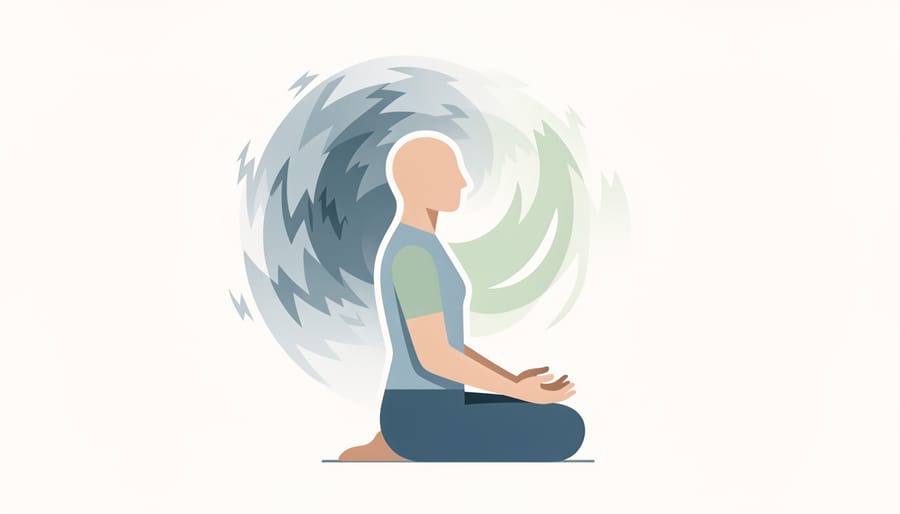
When anxiety floods your system, your body kicks into high gear before your mind can catch up. That’s where physiological interventions come in, they target the automatic physical response directly, giving you a way to interrupt the cycle at its source. Cyclic sighing is proven to manage anxiety effectively by working with your breath pattern: take a deep breath in through your nose, add a second shorter inhale to fully expand your lungs, then release slowly through your mouth. This extended exhale activates your parasympathetic nervous system, signaling your body to shift out of threat mode. The beauty of cyclic sighing is its immediacy, you can use it anywhere, anytime the physical symptoms start building. Other body-level tools include progressive muscle relaxation (tensing and releasing muscle groups to reduce physical tension) and music to calm your nervous system. These techniques don’t require you to analyze your thoughts or change your behavior first; they simply reset your physiology, which then makes it easier to think clearly and respond differently.
Cognitive Strategies
The thinking patterns that drive anxiety often follow rigid rules: “I must perform perfectly,” “Something terrible will happen,” or “I can’t handle this.” These inflexible thoughts interpret physical sensations as threats and generate catastrophic predictions that keep the cycle spinning.
Start by noticing your automatic thoughts when anxiety rises. What’s the story you’re telling yourself? Write it down without judgment. Then ask: Is this thought helpful? Is it accurate? What’s the evidence for and against it? What would I tell a friend in this situation?
Replace rigid thinking with flexible alternatives. Instead of “I can’t handle this,” try “This is uncomfortable, but I’ve managed difficult feelings before.” Swap “This will be a disaster” for “I don’t know what will happen, but I can respond as it unfolds.”
This isn’t about positive thinking or pretending anxiety doesn’t exist. It’s about loosening the grip of unhelpful patterns and creating mental space to respond differently, which weakens the cycle over time.
Behavioral Changes
Avoidance feels like relief in the moment, but it’s what keeps the anxiety cycle spinning. Each time you sidestep a situation that triggers anxiety, you reinforce the message that the threat was real and escape was necessary. Breaking this pattern means gradually facing the situations you’ve been avoiding, starting small and building from there.
These small exposures aren’t about pushing through fear recklessly. They’re strategic: you choose a manageable challenge, notice that the predicted catastrophe doesn’t happen, and build evidence that you can handle discomfort. Over time, this chips away at the cycle’s power. You might start by staying in an uncomfortable situation for just two minutes longer than usual, or sending that email you’ve been putting off.
The key is consistency over intensity. Gradual exposure builds genuine confidence because you’re proving to yourself, through direct experience, that anxiety is uncomfortable but not dangerous. This breaks the temporary-relief trap and teaches your nervous system that avoidance isn’t necessary for safety.
Support and Resources
Breaking the anxiety cycle alone isn’t always realistic, and knowing when to reach out matters. If anxiety is interfering with daily life, causing persistent avoidance at work, school, or social settings, or if self-help strategies haven’t brought relief, professional support can provide the personalized approach you need.
Structured programs offer a middle ground between doing it alone and formal therapy. The Canadian Mental Health Association is offering a free six-week course starting January 29th, designed specifically to help break the cycle of anxiety and provide practical tools for overcoming it. These kinds of programs give you evidence-based strategies in a supportive group format.
Therapy or coaching can tailor interventions to your specific triggers and patterns. A therapist can guide you through cognitive techniques to challenge unhelpful thinking, design gradual exposure plans to reduce avoidance, and teach physiological tools like cyclic sighing that calm your nervous system. The goal isn’t just symptom relief, it’s building skills you can use whenever the cycle tries to start again.
Common Questions About the Anxiety Cycle
What is chronic anxiety and how does it relate to the cycle?
Chronic anxiety develops when the cycle of anxiety, physical response, anxious thoughts, avoidance behaviors, and temporary relief, becomes a persistent pattern that repeats over weeks or months. The cycle reinforces itself each time you avoid a trigger, making the anxiety more entrenched and harder to interrupt without deliberate intervention.
How do you break the cycle of anxiety?
Breaking the cycle requires interrupting it at multiple points: using physiological techniques like cyclic sighing to calm your physical response, challenging inflexible thinking patterns that fuel catastrophic predictions, and gradually reducing avoidance behaviors that provide short-term relief but strengthen the pattern long-term. Combining these approaches creates sustainable change.
Why does school refusal become persistent?
School refusal persists because the cycle of anxiety, avoidance, and temporary relief becomes self-reinforcing. When a child avoids school and experiences immediate relief from their anxiety, it strengthens the association between avoidance and safety, making the pattern harder to break without support.
What is cyclic sighing and how does it help?
Cyclic sighing is a proven breathing technique for anxiety management that involves taking two inhales through your nose followed by a long exhale through your mouth. This pattern activates your body’s calming response and interrupts the physical component of the anxiety cycle, giving you a concrete tool to use when you notice symptoms escalating.
The questions people ask about the anxiety cycle often reflect where they’re stuck in their own pattern. If you’re wondering whether anxiety is on the rise, you’re not alone in noticing the trend. Nearly one in five Canadians are experiencing anxiety right now, and one in three will face it at some point in their lifetime. Recognizing that this is a widespread challenge can reduce the isolation that often accompanies anxiety and remind you that effective tools and support exist.
The cycle of anxiety is remarkably common, nearly one in five Canadians experience anxiety right now, and one in three will face it at some point in their lifetime. If you recognize yourself in these patterns, you’re not alone, and more importantly, you’re not stuck. The cycle feels automatic and overwhelming, but it’s also predictable, which means it can be interrupted.
Breaking the pattern doesn’t require overhauling your entire life overnight. Start small. Try cyclic sighing when you notice physical tension building. Pay attention to one avoidance behavior you rely on and ask yourself what small step you could take instead. Reach out to a professional who can help you build personalized strategies that fit your specific triggers and circumstances.
Sustainable change comes from consistent practice, not perfection. Some interventions will resonate more than others, and that’s expected. The Canadian Mental Health Association offers a free six-week course starting January 29th designed specifically to help break the cycle of anxiety and build practical tools. Whether you start there, with a technique you learned here, or by booking an appointment with a therapist, what matters is taking that first step toward interrupting the pattern.