Peptides are short chains of amino acids, the same building blocks that make up proteins, but with far fewer links in the chain (generally fewer than 50). Your body makes thousands of them, and they act as chemical messengers that tell cells to release hormones, repair tissue, or regulate blood sugar. Researchers study them in labs across the country, which raises the question of where Canadian labs buy research peptides for legitimate work. That last job is where Canada enters the story. In 1921 and 1922, researchers at the University of Toronto isolated insulin, a peptide hormone, and turned a fatal diagnosis into a manageable condition. It remains one of the most important medical breakthroughs of the twentieth century.
This article traces how peptide science grew from early lab curiosity into a field that touches modern medicine, nutrition, and ongoing research, and why Canadian discoveries sit at its foundation. Along the way, we’ll look at how peptides work, how they’re used, and what today’s researchers are studying. Think of it as a plain-language guide to a field that’s older, and closer to home, than most people realize.
What Peptides Are in Plain Language

Think of amino acids as individual beads. Link a few of them together and you have a peptide. Link hundreds into a long, folded structure and you have a protein. That’s the basic idea, and it helps to keep these terms straight before we get into the history.
- Amino acid
- A small organic molecule and the basic building block of peptides and proteins. Your body uses 20 common types.
- Peptide bond
- The chemical link that joins one amino acid to the next, forming a chain.
- Peptide
- A short chain of amino acids connected by peptide bonds, often just a few to a few dozen units long.
- Protein
- A much longer, folded chain of amino acids, often hundreds of units, with a complex three-dimensional shape.
- Hormone
- A chemical messenger that travels through the body to coordinate processes like growth, metabolism, and blood sugar. Some hormones are peptides.
The main difference between a peptide and a protein is size and complexity. A short chain tends to be simple and moves around easily. A long chain folds into an intricate shape that lets it act as an enzyme or a structural material. There’s no perfectly sharp cutoff, and scientists sometimes use “polypeptide” for the in-between lengths.
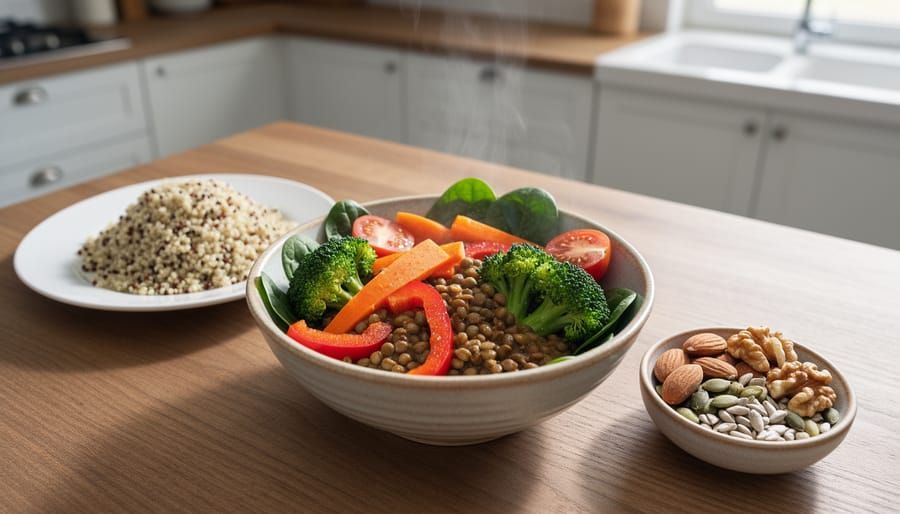
You already meet peptides every day. When you eat eggs, fish, beans, or yogurt, digestion breaks the proteins in them into smaller peptides and amino acids before your body absorbs them. Your body also makes its own peptides, including several that act as hormones. So peptides aren’t exotic or new. They’re a natural part of food and of how you function, which is exactly why they’ve been studied for so long.
How Peptides Work in the Body

Peptides do two main jobs in the body: they carry messages, and they supply raw material.
As messengers, many peptides act like tiny keys. A cell releases a peptide, it travels through the bloodstream or between neighbouring cells, and it fits into a matching receptor on a target cell. That fit tells the cell to do something, such as release a hormone, adjust blood sugar, or change how hungry you feel. Insulin is a well-known example, and it’s part of why peptide research carries so much weight in medicine.
As building blocks, peptides show up when you eat. Proteins in food, whether from eggs, beans, fish, or dairy, are broken down during digestion into smaller peptides and individual amino acids. Enzymes in the stomach and small intestine do most of this work. Your body then absorbs the pieces and reuses them to build and repair tissues, make enzymes, and support everyday functions.
Size is a big part of the story. Peptides are small enough to be absorbed and to slip into tight spaces between cells, yet large enough to carry specific instructions. That balance helps explain why they can be so precise. It also explains why many peptides are fragile: digestive enzymes can break them apart before they ever reach their target, which is one reason some peptide medicines are given by injection rather than swallowed.
It’s worth keeping expectations realistic. Scientists are still learning how different peptides behave, and responses can vary from person to person based on diet, health, and genetics. What works in a lab or for one individual won’t necessarily translate to everyone.
A Short History of Peptide Research
The Early Days: Discovering the Building Blocks
Before anyone talked about peptides, chemists were simply trying to understand what proteins were made of. By the early 1900s, researchers had broken proteins down and identified a handful of smaller units called amino acids, the same ones our bodies still rely on today.
The bigger question was how those units fit together. In the early 1900s, German chemist Emil Fischer proposed that amino acids could join end to end, forming chains through a specific kind of chemical link. He even coined the term “peptide” for these short chains and began building small ones in his lab.
It was a quiet but important shift. Proteins stopped looking like mysterious blobs and started looking like long, organized chains of repeating parts. That simple idea gave later scientists a roadmap for studying everything from the food we eat to the hormones that keep our bodies in balance.
From Hormones to Lab-Made Peptides
Once scientists understood that amino acids link into chains, a bigger question emerged: could these chains be the body’s messengers? In the early 1900s, researchers began noticing that certain glands released substances that traveled through the bloodstream and changed how distant organs behaved. They called these substances hormones, and several of the first ones turned out to be peptides.
The work was slow and painstaking. Researchers had to extract tiny amounts of active material from animal tissue, purify it, and then work out what it was made of. Identifying the exact order of amino acids in a peptide hormone was a landmark achievement of the mid-20th century, and it showed that a short chain’s sequence determines what it does.
The next leap came when chemists learned to build peptides in the lab, piece by piece, rather than harvesting them from animals. Lab synthesis made purer, more consistent peptides possible and opened the door to studying them in detail.
Together, these steps changed how we think about the body. It wasn’t just organs doing separate jobs. It was a conversation, carried by small chains of amino acids, and science had finally learned to read it.
Why This History Matters Today
Knowing where peptide science came from makes today’s headlines easier to read. Much of what you hear about peptides, from collagen powders to recovery products to prescription hormone therapies, builds on the same basic discovery: short amino acid chains can carry real biological signals, and scientists learned to isolate and recreate them.
That history also helps you sort the well-studied from the hopeful. Some peptide uses, like insulin for diabetes, rest on a century of evidence. Others, like many sports recovery and wellness products, are newer, and the research is still catching up. Seeing the difference isn’t about being skeptical for its own sake. It’s about asking better questions of a label or a claim.
There’s a practical payoff, too. When you understand that peptides are part of the body’s everyday communication system, it’s easier to see why they interest nutrition researchers, athletes, and clinicians alike, and why individual results can vary.
It also sets up the next part of the story. Some of the most important early work on peptide hormones happened right here in Canada.
Canada’s Place in the Peptide Story
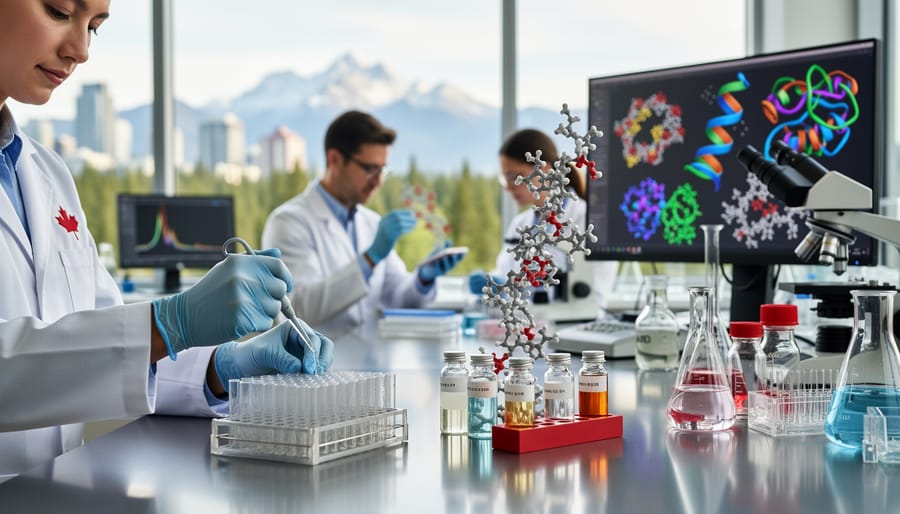
When people ask where Canada fits into the peptide story, the answer starts in Toronto. In 1921 and 1922, Frederick Banting, Charles Best, J.J.R. Macleod, and biochemist James Collip worked together at the University of Toronto to extract and purify insulin, a peptide hormone made of 51 amino acids. In January 1922, a teenager named Leonard Thompson received the first clinical injection of the extract at Toronto General Hospital. Banting and Macleod shared the 1923 Nobel Prize in Physiology or Medicine for the discovery, and each chose to share the prize money with Best and Collip.
What makes this chapter so important is what came next. The University of Toronto sold the insulin patent for a symbolic one dollar so the treatment could be made widely available. Connaught Laboratories, a Toronto institution, went on to produce insulin at scale, turning a lab breakthrough into a treatment people could actually use. Insulin was one of the first peptide hormones used as a medicine, and it showed the world that understanding these small amino acid chains could change lives.
Canadian research did not stop there. Universities and hospital research institutes across the country have continued to study peptides, from hormone signalling to how food-derived proteins break down during digestion. That work feeds into everyday questions Canadians ask today, whether it’s protein timing around a workout or how collagen peptides fit into a balanced diet.
It’s worth keeping the story grounded. Insulin’s success doesn’t mean every peptide product on the shelf has the same level of evidence behind it. But as a piece of national history, it’s a proud reminder that Canadian curiosity helped open the door to modern peptide science.
How Peptides Are Used Today
Peptides aren’t just a lab curiosity. You’ll find them in your pantry, your pharmacy, and your gym bag. How well each use is backed by evidence varies a lot, though, so it helps to see where they fit.
Here are the most common ways people encounter peptides today:
- Dietary protein and collagen peptides: Whey and collagen are broken into smaller peptide chains, which is why they’re often marketed as easier to digest.
- Prescription peptide medicines: Insulin and several other regulated drugs are peptide-based and prescribed for specific medical conditions.
- Sports nutrition and recovery products: Powders and drinks aim to support muscle repair after training.
- Skincare ingredients: Creams and serums include peptides in hopes of supporting skin’s look and feel.
The difference between the first and second items matters. Prescription peptide medicines go through rigorous regulatory review, with proven dosing and monitoring by a healthcare professional. Supplements and cosmetics sit in a different category, and the research behind them is often smaller, newer, or mixed. Some people report benefits from collagen or whey-derived products, while studies show modest or inconsistent results for certain goals. It’s fair to stay curious without expecting miracles.
Peptides also come up in conversations about exercise and recovery where protein timing and quality are popular topics. Peptide products are usually one small piece of a bigger picture that includes overall diet, sleep, training load, and stress. The same goes for body composition goals. Whether someone is exploring calorie restriction or simply trying to eat more protein, a peptide supplement can’t replace the basics.
Both conventional and alternative approaches have a place in a thoughtful wellness routine. What works well for a competitive athlete may not suit someone managing a health condition or taking medication. Before adding a new supplement, talk with a registered dietitian, pharmacist, or doctor who can look at your goals, health history, and budget. Personalized guidance beats a one-size-fits-all plan every time.
Common Questions About Peptides
Curious questions are a good sign. Here are some of the ones readers ask most often, answered in plain language.
Are peptides the same as protein?
Not quite. Peptides are short chains of amino acids, while proteins are much longer and more complex chains that fold into specific shapes. Many proteins get broken down into peptides during digestion.
Are peptides only found in supplements?
No. Peptides occur naturally in foods like dairy, eggs, and meat, and your body makes its own, including hormones that carry messages between cells.
Is insulin really a peptide?
Yes. Insulin is a peptide hormone, which is part of why the early 1920s work in Toronto remains such an important chapter in peptide history.
Are peptide products regulated in Canada?
Health Canada oversees how health products are sold, and prescription medicines are treated very differently from over-the-counter supplements. If you’re unsure about a particular product, Health Canada’s website is a reliable place to check its status.
Whether peptides fit your own nutrition plan depends on your health, goals, and the products involved, and there isn’t a single right answer for everyone. A registered dietitian, pharmacist, or doctor can look at the full picture and help you weigh the options, including both conventional and complementary approaches. It’s also worth checking Health Canada’s guidance before trying anything new. Asking questions first is a smart, sustainable way to build healthy habits.
At their core, peptides are simply short chains of amino acids, but the story behind them is anything but simple. It runs from early chemists piecing together how amino acids link up, through the isolation and lab synthesis of peptide hormones, to the work done in Toronto in the early 1920s that turned insulin into a life-changing therapy. That Canadian chapter still shapes how we think about what small molecules can do in the body.
Understanding this history gives you a steadier footing when peptides pop up in your feed, your grocery aisle, or your gym conversations. You can appreciate the real science without getting swept up in big promises.
If you’re curious about adding peptide-containing foods or supplements to your routine, take it one step at a time. A registered dietitian or your doctor can help you choose what fits your goals, your health history, and your life.