Storing BPC-157 and TB-500 properly means keeping the peptide refrigerated at 2-8°C once reconstituted, where it remains stable for up to 30 days, or frozen at -20°C for extended storage up to six months. The molecule’s 15-amino-acid chain is surprisingly fragile. Temperature fluctuations, light exposure, and improper handling break down its structure and render it ineffective long before you notice any visible changes.
If you’ve invested in BPC-157 for tissue repair, gut health, or recovery support, understanding its molecular vulnerabilities isn’t optional. This synthetic peptide derived from body protection compound found in gastric juice has a specific three-dimensional structure that determines its biological activity. When that structure degrades, you’re left with an expensive vial of inactive fragments.
The challenge is that most guidance on peptide storage stays either too technical or too vague. You need to know why room temperature destroys your supply within hours, not just that it does. You need practical protocols for traveling with peptides, managing power outages, and recognizing when a vial has been compromised.
This article bridges that gap. We’ll walk through BPC-157’s molecular characteristics in plain language, explain exactly how environmental factors affect stability, and give you a complete storage system for both short-term use and long-term reserves. You’ll finish with confidence that your peptide maintains full potency from the moment it arrives until the day you use the last dose.
Understanding BPC-157’s Molecular Structure
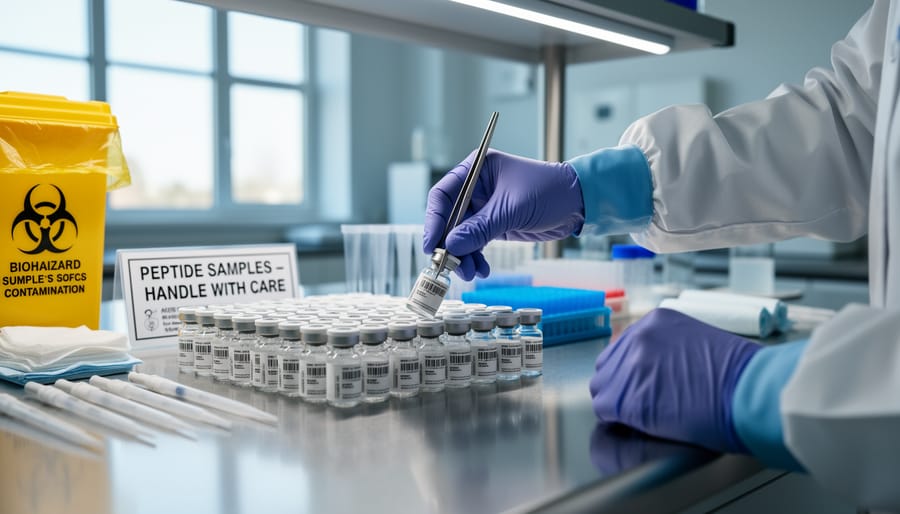
Why Molecular Stability Matters
Peptide bonds, the chemical links joining amino acids together, are inherently vulnerable to breaking down over time. When these bonds degrade, the peptide’s three-dimensional structure collapses, rendering it biologically inactive. Think of it like a key that’s been slightly bent: it might still look similar, but it won’t turn the lock anymore.
BPC-157’s molecular stability determines whether you’re administering an effective compound or essentially expensive salt water. Heat, light, oxygen, and pH fluctuations all accelerate peptide degradation. Even modest temperature swings can trigger hydrolysis, where water molecules break peptide bonds apart. UV light exposure causes oxidative damage to sensitive amino acid residues, particularly those containing sulfur groups. Bacterial contamination introduces enzymes that actively slice through peptide chains.
The practical consequence? A degraded peptide won’t bind properly to its target receptors in your body. The specific amino acid sequence that gives BPC-157 its purported properties must remain intact for any biological activity to occur. Partial degradation might reduce potency by 50% or more before you notice any visual changes in the solution.
This molecular fragility explains why storage isn’t just a minor detail, it’s the difference between a stable, potentially effective compound and one that’s already broken down before you use it. Every hour spent at improper temperatures or exposed to light chips away at the peptide’s structural integrity.
Optimal Storage Conditions for BPC-157
Storing Lyophilized BPC-157
Lyophilized BPC-157 in powder form is considerably more stable than its reconstituted counterpart, but it still requires careful handling to maintain its molecular integrity. When stored properly, you can expect the powder to remain viable for 12 to 24 months, though many suppliers conservatively list 6 to 12 months on their labels.
The ideal storage temperature for lyophilized BPC-157 is between 2°C and 8°C (36°F to 46°F), which is standard refrigerator temperature. Unlike reconstituted peptides, the powder form can tolerate brief periods at room temperature during shipping or handling without significant degradation, but you shouldn’t make a habit of leaving it out. Some sources indicate that unopened, properly sealed lyophilized BPC-157 can remain stable at room temperature for short periods, but refrigeration extends shelf life and provides a safety margin.
Key requirements for storing powder BPC-157 include:
- Keep in original sealed vial until ready to reconstitute
- Store in refrigerator at 2°C to 8°C (36°F to 46°F)
- Protect from light by keeping in original packaging or amber vial
- Avoid moisture exposure by never opening vials in humid environments
- Store away from freezer compartments that create temperature fluctuations
- Keep away from strong-smelling foods that could permeate the seal
Moisture is the primary enemy of lyophilized peptides. The powder form is hygroscopic, meaning it readily absorbs water from the air. Even brief exposure to humid air during opening can introduce enough moisture to start degradation. Always work in a clean, dry environment when handling unopened vials, and never remove the rubber stopper until you’re ready to reconstitute.
Light exposure, particularly UV light, can also break peptide bonds over time. Most suppliers package BPC-157 in amber or opaque vials for this reason. If your vial is clear glass, store it in its original box or wrap it in aluminum foil for added protection.
Storing Reconstituted BPC-157
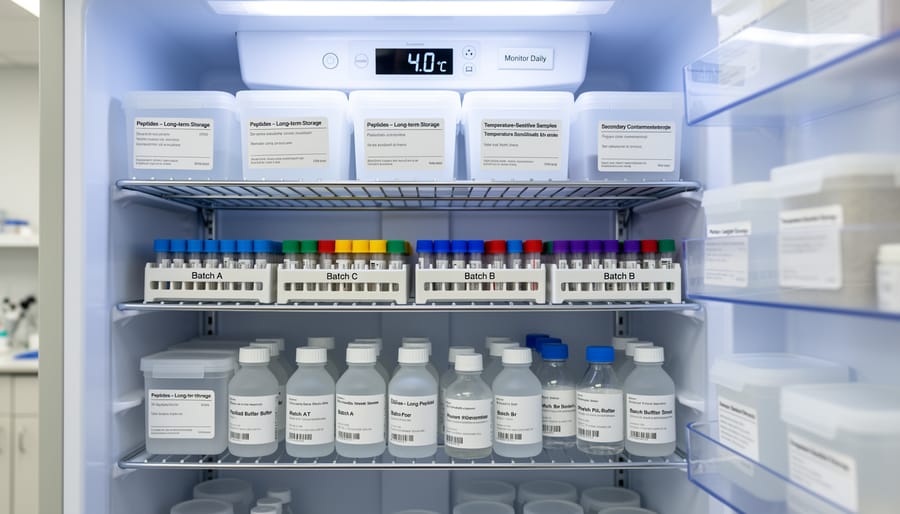
Once you’ve mixed BPC-157 with bacteriostatic water, its storage requirements become much stricter than the powder form. Reconstituted peptides are vulnerable to bacterial growth and molecular breakdown, which means attention to temperature and timing isn’t optional.
Refrigeration Is Non-Negotiable
Store your reconstituted BPC-157 between 2°C and 8°C (36°F to 46°F) immediately after mixing. The back of your refrigerator’s main compartment works best since the door experiences temperature swings every time you open it. Never leave reconstituted BPC-157 at room temperature for more than 30 minutes during preparation or dosing.
Realistic Shelf Life Expectations
When stored properly in bacteriostatic water, reconstituted BPC-157 maintains stability for approximately 28 to 30 days. Some sources claim longer viability, but this timeline offers a practical safety margin. If you’ve used sterile water instead of bacteriostatic water, reduce that window to 3 to 5 days maximum since you lack the preservative that inhibits bacterial growth.
Mark your vial with the reconstitution date using a permanent marker. After 30 days, discard any remaining solution regardless of appearance.
Watch for These Warning Signs
Clear, colorless solution is what you’re looking for. Degradation shows up as cloudiness, color changes (yellowing or darkening), visible particles floating in the liquid, or separation into layers. Any of these indicators mean the peptide has compromised and should be discarded immediately.
If your vial develops an unusual smell when you remove the stopper, that’s another red flag for bacterial contamination or chemical breakdown. When in doubt, throw it out. The cost of replacing a vial is minimal compared to injecting a degraded or contaminated substance.
Factors That Compromise BPC-157 Stability
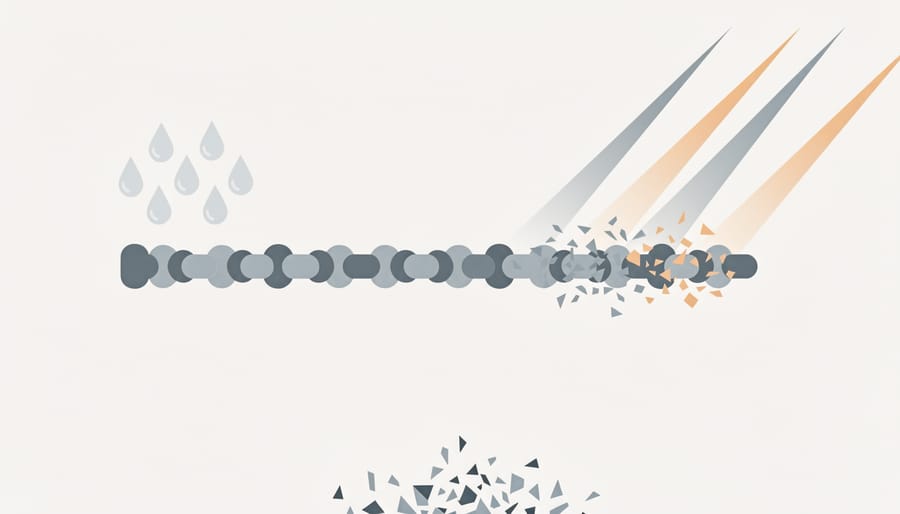
Understanding what can damage BPC-157 at the molecular level helps you protect your investment and ensures the peptide remains effective. Several environmental and handling factors pose significant threats to peptide stability.
Temperature fluctuations represent one of the most common causes of degradation. When BPC-157 experiences repeated warming and cooling cycles, the peptide bonds become stressed and can break down. Even brief exposure to room temperature during handling adds up over time, gradually reducing potency. This is why consistent refrigeration matters more than occasional cold storage.
UV light exposure accelerates molecular breakdown through a process called photodegradation. Light energy breaks peptide bonds and can cause structural changes that render BPC-157 ineffective. Clear vials offer no protection, which is why amber or opaque containers are essential. Even brief exposure to direct sunlight can cause measurable degradation within hours.
pH changes create an unstable chemical environment for peptides. BPC-157 maintains its structure best in a neutral pH range. Using tap water for reconstitution, for example, introduces variable pH levels and minerals that can trigger breakdown. Bacteriostatic water is formulated to maintain the appropriate pH for peptide stability.
Bacterial contamination introduces enzymes that actively break down peptides. Unlike simple chemical degradation, bacterial growth accelerates exponentially once contamination occurs. A single contaminated needle or non-sterile mixing surface can introduce microorganisms that rapidly compromise an entire vial.
| Degradation Factor | Effect on Molecular Structure | Prevention Strategy |
|---|---|---|
| Temperature fluctuations | Weakens peptide bonds, causes structural instability | Maintain consistent 2-8°C refrigeration |
| UV light exposure | Breaks bonds through photodegradation | Store in amber vials, keep away from windows |
| pH imbalance | Disrupts chemical stability, triggers breakdown | Use only bacteriostatic or sterile water |
| Bacterial contamination | Enzymatic breakdown of peptide chains | Maintain strict sterile technique |
| Freeze-thaw cycles | Physical stress damages molecular integrity | Never refreeze reconstituted solution |
Repeated freeze-thaw cycles cause physical stress that damages molecular integrity. Ice crystal formation during freezing can disrupt the three-dimensional structure of peptides. Each thaw allows partial degradation before refreezing adds more damage. This cumulative effect makes previously frozen and thawed BPC-157 substantially less effective than properly stored material.
Oxygen exposure also contributes to degradation through oxidation reactions. While less dramatic than other factors, prolonged air exposure in partially used vials slowly diminishes potency. This is another reason why smaller vials matched to your usage schedule work better than large quantities that sit partially used for weeks.
Practical Storage Tips for Home Use
Most people storing BPC-157 at home don’t need a laboratory setup, but you do need a system that protects your investment and maintains sterility. A dedicated spot in your main refrigerator compartment works best, avoid the door, where temperature swings with every opening, and skip the back wall where items sometimes freeze.
Choose a small, clean container or zippered bag to keep your BPC-157 vials separate from food. This prevents cross-contamination and makes it easy to spot if anything looks off. Store vials upright to minimize contact with the rubber stopper, and keep reconstituted solutions away from raw foods or items that could leak.
Label everything immediately. Write the reconstitution date directly on the vial with a permanent marker, or use adhesive labels that show when you mixed it and when you should discard it. For powder form, note the receipt or purchase date. This simple habit removes all guesswork about whether your peptide is still good.
Maintaining sterility matters as much as temperature. Always use alcohol wipes to clean the vial stopper before every draw, even if you’re the only person using it. Never touch the needle tip, and replace needles between uses. These safe storage habits extend beyond the refrigerator, sterile technique during every interaction with your vials prevents bacterial growth that can ruin the entire supply.
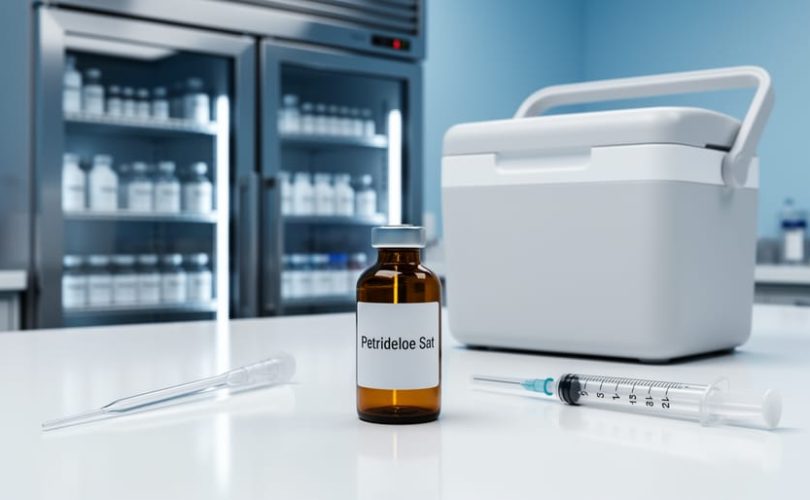
When traveling, use a small insulated container with ice packs for trips under eight hours. For longer journeys, particularly with reconstituted BPC-157, consider whether it’s worth the risk, powder form travels more forgivingly. If you must travel with liquid, keep it consistently cold and use it within days of returning home. Temperature loggers sold for insulin storage can give you peace of mind that your peptide stayed within range throughout the trip.
Reconstitution Best Practices
Proper reconstitution protects BPC-157’s delicate molecular structure and prevents contamination. Start by washing your hands thoroughly and cleaning your workspace with an alcohol wipe. Use bacteriostatic water if you’ll store the solution for more than a few days, it contains benzyl alcohol at 0.9% to inhibit bacterial growth. For single-use situations, sterile water works fine and may reduce injection site discomfort.
When you’re ready to mix, remove both the lyophilized BPC-157 vial and bacteriostatic water from refrigeration and let them reach room temperature for about 10 minutes. This prevents temperature shock that can damage peptide bonds. Draw your bacteriostatic water into a sterile syringe, then inject it slowly down the inside wall of the vial rather than directly onto the powder. Never shake the vial, this creates foam and can break peptide chains. Instead, gently swirl or roll the vial between your palms until the powder dissolves completely, which usually takes one to two minutes.
Throughout the process, maintain sterile handling by keeping vial caps covered until you’re ready to use them, never touching needle tips, and using fresh alcohol wipes to clean rubber stoppers before each needle insertion. If you notice any cloudiness, discoloration, or particles that won’t dissolve, don’t use that batch. Once reconstituted, immediately return the solution to refrigerated storage at 2-8°C, where it remains stable for up to four weeks with bacteriostatic water or about one week with sterile water.
How to Tell If BPC-157 Has Degraded
Recognizing when BPC-157 has degraded is crucial for both safety and effectiveness. Fresh, properly stored BPC-157 should be completely clear and colorless in its reconstituted form, resembling water. Any deviation from this appearance signals potential problems.
The most obvious red flag is cloudiness or haziness in the solution. This turbidity suggests protein aggregation, where the peptide molecules are clumping together rather than remaining properly dispersed. Similarly, any color change, even a slight yellow, amber, or brown tint, indicates oxidation or breakdown of the molecular structure. Healthy BPC-157 never develops color.
Look closely for particulate matter: tiny floating particles, visible specks, or sediment at the bottom of the vial. These could represent degraded peptide fragments, bacterial contamination, or crystallization. Any particulates mean the solution should not be used.
While peptides typically have minimal odor, an unusual smell, particularly anything sour, rancid, or chemical, suggests contamination or breakdown. Fresh BPC-157 should be essentially odorless.
If your vial has been stored beyond recommended timeframes (typically four weeks for reconstituted solutions), degradation becomes increasingly likely even without visible signs. Potency decreases over time regardless of appearance.
When in doubt, throw it out. The cost of replacing a compromised vial is minor compared to the risk of injecting degraded or contaminated material. Never use BPC-157 that shows any of these warning signs, and always prioritize safety over salvaging a questionable product.
Common Storage Mistakes to Avoid
Even well-intentioned users can unknowingly sabotage their BPC-157 through common handling errors. One frequent mistake involves storing reconstituted vials in the refrigerator door. Every time you open the fridge, those items experience temperature swings, sometimes several degrees, which accelerates peptide degradation. Instead, place your vial on an interior shelf where temperature remains stable.
Extended room temperature exposure ranks among the most damaging mistakes. Some people leave their vial on the counter while preparing an injection, then get distracted for twenty or thirty minutes. Even brief warm periods accumulate over time, breaking down the molecular structure. Take out your vial, prepare your dose immediately, and return it to the fridge within two minutes.
Contamination from reused needles or non-sterile equipment destroys entire vials. Always use fresh, sterile needles for withdrawal, and never touch the rubber stopper with your fingers. Some users try to economize by reusing syringes, this introduces bacteria that multiply rapidly and compromise the entire solution.
Failing to label reconstitution dates causes confusion about whether your BPC-157 remains viable. Write the date clearly on the vial with permanent marker the moment you mix it. Without this tracking, you’re guessing whether your thirty-day window has passed.
For those traveling with their peptide, applying proper travel storage tips prevents temperature-related degradation during transport. Many people simply toss their vial in a suitcase, where it sits at room temperature for hours. Use insulated containers with cold packs to maintain appropriate conditions throughout your journey.
Frequently Asked Questions
How long can I store reconstituted BPC-157 in the refrigerator?
Once mixed with bacteriostatic water, BPC-157 typically remains stable for 4-6 weeks when properly refrigerated at 36-46°F (2-8°C). With sterile water, use within 3-5 days as it lacks the preservative that inhibits bacterial growth.
Can I freeze BPC-157 to extend its shelf life?
Freezing reconstituted BPC-157 is not recommended because ice crystal formation can damage the peptide’s molecular structure. Lyophilized powder can be stored in a freezer at -4°F (-20°C) or colder for extended periods, but avoid repeated temperature changes.
What should I do if I accidentally left my BPC-157 out of the refrigerator?
If reconstituted BPC-157 was left at room temperature for less than 2-3 hours, refrigerate it immediately and it should remain usable. Beyond four hours of room temperature exposure, the peptide’s integrity becomes questionable and you should consider discarding it for safety.
How do I safely travel with BPC-157?
Use an insulated cooler bag with ice packs to maintain refrigeration temperature, keeping reconstituted peptide below 46°F (8°C). For flights, pack it in your carry-on rather than checked luggage where temperature control is unreliable, and consider bringing your prescription or supporting documentation.
These questions reflect the real concerns people have when incorporating recovery supplements like BPC-157 into their wellness routines. Storage anxiety is common among first-time peptide users, but following the guidelines outlined throughout this article will help you maintain your investment and ensure you’re using a product that retains its intended properties. Remember that when in doubt about whether your BPC-157 has been compromised, err on the side of caution and dispose of it properly.
Understanding BPC-157’s molecular structure and following proper storage protocols aren’t just technical requirements, they’re fundamental to preserving the peptide’s potential benefits, whether you’re using it for exercise recovery or other wellness goals. The 15-amino-acid chain that makes this compound effective is also what makes it vulnerable to environmental degradation.
The guidelines we’ve covered, refrigerating reconstituted BPC-157, protecting powder form from moisture and light, maintaining sterile technique during reconstitution, and avoiding temperature fluctuations, aren’t arbitrary rules. They’re based on the peptide’s molecular characteristics and the conditions that preserve its structural integrity. Cut corners on storage, and you risk using a degraded product that won’t deliver the results you’re seeking.
Before starting any peptide regimen, consult with a healthcare professional who understands your health history and can provide personalized guidance. They can help you determine if BPC-157 is appropriate for your situation and ensure you’re using it safely.
Quality matters from the start. Source your BPC-157 from reputable suppliers who provide certificates of analysis and follow good manufacturing practices. Once you have a quality product, your job is to keep it that way through careful handling and storage. The effort you put into proper storage directly translates to the reliability of your results.