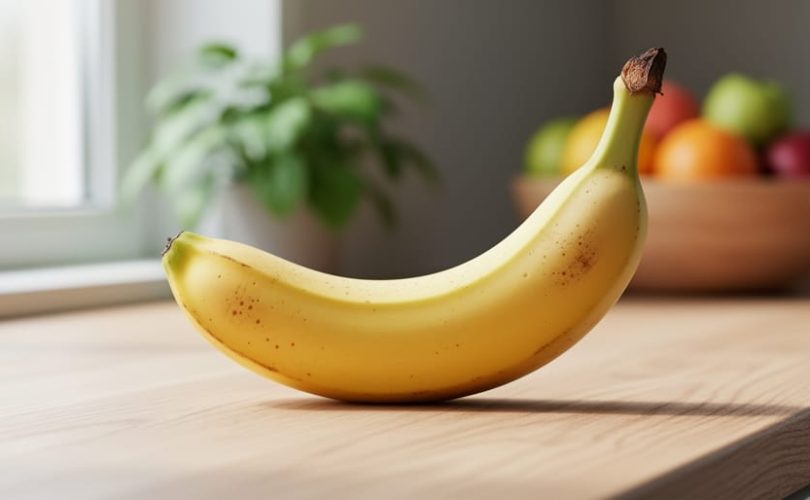
One medium banana (about 118 grams) delivers 105 calories, 27 grams of carbohydrates, 3 grams of fiber, and 14 grams of natural sugars. You’ll also get 422 milligrams of potassium (roughly 12% of your daily needs), 10 milligrams of vitamin C, and small amounts of magnesium and vitamin B6. Understanding these numbers matters because bananas often get unfairly labeled as either a superfood or a sugar bomb, when the truth sits comfortably in between.
The nutritional profile of bananas makes them a genuinely practical choice for most eating patterns. That potassium content supports healthy blood pressure, while the fiber helps with digestion and keeps you feeling satisfied longer than you’d expect from a piece of fruit. The natural sugars come packaged with nutrients and fiber, which is a different story than added sugars in processed foods.
If you’re tracking calories or managing your weight, that 105-calorie count gives you clear data to work with. A banana won’t derail your goals, but like any food, portion awareness helps. The ripeness affects the glycemic response too. Greener bananas have more resistant starch (which acts like fiber), while riper bananas have more readily available sugars and taste sweeter.
What makes bananas particularly useful is their consistency. Unlike many fruits that vary wildly in size and therefore nutrition, bananas stay fairly predictable. You can count on similar numbers whether you’re grabbing one in January or June 2026, making meal planning and tracking straightforward.
Banana Nutrition Facts: The Complete Numbers
One medium banana, about 7 inches long and weighing roughly 118 grams, delivers a surprisingly complete nutritional package in its portable, natural wrapper. Here’s exactly what you’re getting.
A single medium banana contains 110 calories, making it a moderate-energy snack that fits comfortably into most eating plans. The calorie breakdown reveals why bananas satisfy: they’re composed almost entirely of carbohydrates (28 grams total), with 15 grams coming from natural sugars and 3 grams from fiber. You’ll find 1 gram of protein and virtually no fat.
| Nutrient | Amount per Medium Banana | % Daily Value |
|---|---|---|
| Calories | 110 | |
| Carbohydrates | 28g (15g sugar, 3g fiber) | |
| Potassium | 450mg | ~13% |
| Vitamin B6 | 0.37mg | 22% |
| Vitamin C | 8.70mg | 10% |
The micronutrient profile is where bananas truly shine. Potassium leads the pack at 450 milligrams per banana, supporting everything from muscle function to blood pressure regulation. Vitamin B6 delivers an impressive 22% of your daily value at 0.37 milligrams, playing a crucial role in energy metabolism and brain health. You’ll also get 8.70 milligrams of vitamin C (10% of your daily needs), plus meaningful amounts of magnesium and manganese.
These numbers represent one medium banana nutrients in their natural, unprocessed form, no additives, no processing, just whole food nutrition. The combination of quick-digesting sugars and slower-releasing fiber creates a balanced energy source that works differently than isolated sugar or refined carbohydrates.
What makes these numbers particularly useful is their consistency. Unlike many foods where nutrition varies wildly by preparation method, a medium banana delivers remarkably predictable nutrition whether you eat it for breakfast, as a pre-workout snack, or blended into a smoothie.
What Makes Bananas Nutritionally Unique
Potassium Powerhouse
That banana potassium amount of 450mg per medium fruit represents roughly 10% of most adults’ daily needs, making bananas one of the most potassium-rich foods you can grab on the go. This matters more than you might think.
Potassium works behind the scenes to keep your muscles contracting smoothly, whether you’re lifting weights, running, or just walking up stairs. When levels drop, you might notice cramping or fatigue during workouts. For anyone who sweats regularly through exercise, bananas offer a convenient way to replenish what you lose.
Beyond the gym, this mineral helps regulate blood pressure by counterbalancing sodium’s effects on your cardiovascular system. It supports the electrical signals that keep your heart beating steadily and helps your kidneys remove excess sodium through urine. The electrolyte balance potassium provides becomes especially important if you’re following a lower-carb eating pattern or pushing through hot summer workouts.
The beauty of getting potassium from whole food like bananas, rather than supplements, is that your body absorbs and uses it more effectively when it comes packaged with fiber and other nutrients.
B6 and Energy Metabolism
One medium banana delivers 0.37mg of vitamin B6-22% of your daily value in a single piece of fruit. That’s a substantial contribution from one food, and it matters more than most people realize.
Vitamin B6 acts as a cofactor in over 100 enzyme reactions throughout your body, many of them focused on breaking down proteins, carbohydrates, and fats into usable energy. If you’ve ever felt mentally foggy or physically sluggish despite eating enough, insufficient B6 could be part of the reason. The banana vitamin B6 content helps your cells convert the food you eat into ATP, the molecule that powers everything from muscle contractions to brain function.
Beyond energy production, B6 supports neurotransmitter synthesis, the chemical messengers that regulate mood, focus, and sleep. It’s involved in creating serotonin and dopamine, which is why adequate B6 intake has been linked to improved mood stability and reduced irritability. For adults juggling work, family, and fitness goals, that cognitive and emotional support can be just as valuable as the physical energy boost.
This makes bananas particularly useful when you’re feeling drained. The combination of quick-digesting carbohydrates for immediate fuel and B6 for longer-term metabolic support creates a practical two-pronged approach to fighting fatigue.
Bananas and Weight Management: Separating Fact from Fiction
The Carbohydrate Question
Let’s address what causes the most confusion about bananas: those 28 grams of carbohydrates. Many popular diet trends have demonized carbs, leading people to wonder if bananas can fit into their plans at all.
Here’s what those 28g actually contain: 15g of natural sugars, 3g of fiber, and roughly 10g of starch. This composition matters more than the total number. The 15g of sugar isn’t added sweetener, it’s fructose, glucose, and sucrose that occur naturally in the fruit. Unlike processed sugar, these come packaged with fiber, which slows their absorption into your bloodstream.
That 3g of fiber plays a crucial role in how your body processes the sugars. Fiber creates a steadier release of glucose, preventing the sharp spikes and crashes you’d get from 15g of table sugar. For most people, this translates to sustained energy rather than a quick rush followed by hunger 30 minutes later.
How this affects you personally depends on your metabolic health and activity level. Someone following strict calorie restrictions or very low-carb eating might choose to skip bananas or save them for post-workout. Others find that a banana keeps them satisfied between meals, making it easier to avoid less nutritious snacks.
The practical takeaway: 28g of carbs from a banana behaves differently in your body than 28g from candy or white bread. Context and individual response matter more than the raw number.
When Bananas Support Your Goals
Certain situations call for a quick, nutritious energy source, and bananas excel in these moments. If you’re combining weight loss and exercise that 110-calorie package with 28 grams of carbohydrates provides readily available fuel without the crash that comes from processed snacks. The natural sugars deliver quick energy while the 3 grams of fiber help sustain you through your workout or recovery period.
Bananas shine when you need portable nutrition. Unlike many whole foods requiring refrigeration or preparation, you can toss one in your bag and eat it anywhere, during a commute, between meetings, or as an afternoon pick-me-up. This convenience factor often makes the difference between choosing a whole food and reaching for less nutritious options when hunger strikes.
They’re also remarkably effective at satisfying sweet cravings. When you want something sweet but don’t want empty calories, a banana delivers 15 grams of natural sugar paired with fiber, potassium, and B vitamins. This combination satisfies your taste buds while contributing to your daily fruit intake and nutrient needs.
For those struggling to meet recommended fruit servings, bananas offer an approachable option. Their mild flavor, soft texture, and year-round availability remove common barriers that keep people from eating enough fruit. Whether you’re building consistent nutrition habits or supporting specific fitness goals, bananas can be a strategic choice rather than a dietary obstacle.
Health Benefits Beyond the Scale
The nutrients packed into each banana deliver advantages that extend far beyond their calorie count or macronutrient profile. Understanding these broader health benefits helps you see bananas as more than just a convenient snack, they’re a functional food that supports multiple body systems.
Your digestive system particularly benefits from the 3 grams of fiber in each banana. This fiber acts as fuel for beneficial gut bacteria, supporting a healthy microbiome that influences everything from immune function to mental clarity. The resistant starch found in bananas, especially greener ones, behaves similarly to fiber by passing through your upper digestive tract undigested and feeding the good bacteria in your colon. This process produces short-chain fatty acids that support intestinal health and may help regulate appetite over time.
The 450mg of potassium in each medium banana provides significant cardiovascular support. This mineral helps counterbalance sodium’s effects, supporting healthy blood pressure levels and reducing strain on your cardiovascular system. For those managing heart health or simply looking to support long-term wellness, bananas offer a whole-food source of this essential nutrient that many people don’t get enough of through their daily diet.
Athletes and active individuals gain specific advantages from banana nutrition. The combination of quickly digestible carbohydrates and potassium makes them excellent for exercise recovery, helping replenish glycogen stores while replacing electrolytes lost through sweat. This natural recovery food can help you boost metabolism through more effective training sessions, since proper recovery allows for consistent, high-quality workouts.
The 22% daily value of vitamin B6 supports your energy production at a cellular level, helping convert the food you eat into usable fuel. This same nutrient plays a role in producing neurotransmitters like serotonin and dopamine, which influence mood and mental well-being. When you’re feeling depleted or mentally foggy, a banana provides nutrients that support both physical energy and cognitive function, benefits that matter whether you’re preparing for a workout, powering through an afternoon slump, or simply maintaining steady energy throughout your day.
How to Incorporate Bananas Into Your Nutrition Plan
Smart Pairing Strategies
Pairing bananas with protein, healthy fats, or both transforms them from a quick carbohydrate hit into a more balanced, satisfying snack or meal component. The 15 grams of natural sugar and 28 grams of total carbohydrate digest more slowly when combined with complementary nutrients, helping maintain steadier energy and reducing the chance you’ll feel hungry again within an hour.
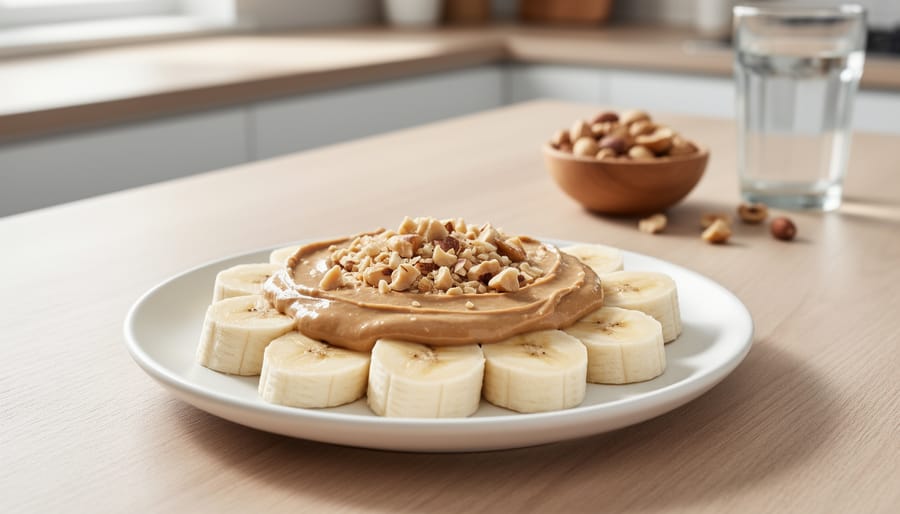
The classic combination of banana with almond butter, peanut butter, or cashew butter adds protein and fat that slow digestion and enhance satiety. You get the potassium and vitamin B6 from the banana plus sustained energy from the nut butter, ideal for mid-morning or afternoon snacks.
In smoothies, pair a banana with Greek yogurt, protein powder, or silken tofu. The fruit provides natural sweetness and creamy texture while the protein source keeps you fuller longer. Add spinach or kale for extra micronutrients without changing the flavor significantly.
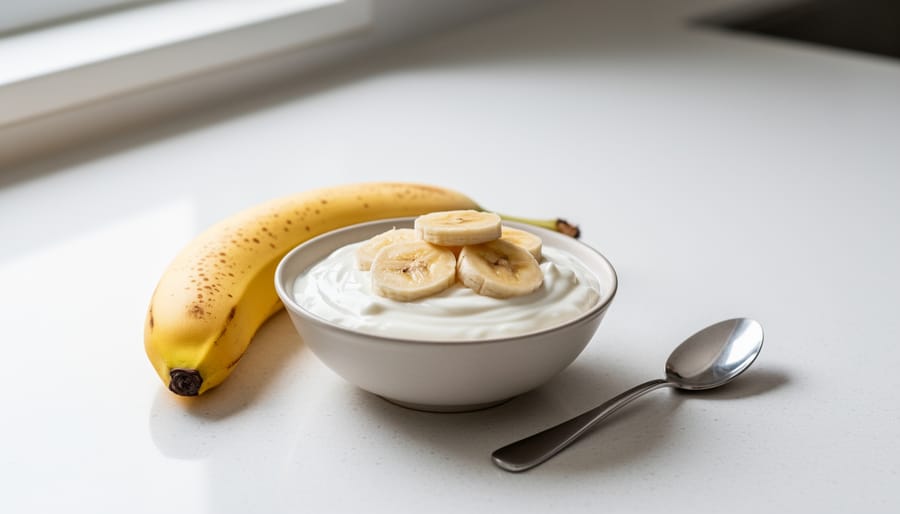
For breakfast, slice banana over plain Greek yogurt with a sprinkle of nuts or seeds. This combination delivers protein, probiotics, fiber, and healthy fats alongside the banana’s potassium and B vitamins, a genuinely balanced start that supports energy throughout the morning without spiking blood sugar.
Ripeness and Your Goals
The color of the banana you choose can actually shape how it affects your energy and appetite. Greener bananas contain more resistant starch, a type of carbohydrate that your body digests more slowly. This slower breakdown means a gentler rise in blood sugar and longer-lasting fullness, making them a better choice if you’re managing blood sugar levels or looking to stay satisfied between meals. As bananas ripen and develop brown spots, that resistant starch converts to simple sugars, which your body absorbs quickly for fast energy.
If you’re heading into a workout or need quick fuel, a riper banana delivers glucose to your muscles faster. For breakfast or an afternoon snack when you want sustained energy, reach for one that’s still partly green. Many people find they can eat a slightly green banana in the morning without triggering cravings later, while others prefer the sweeter taste and easier digestibility of a fully ripe one.
There’s no single right answer. Pay attention to how different ripeness levels affect your hunger, energy, and digestion, then stock your kitchen accordingly.
Armed with the complete nutritional breakdown of bananas, you now have the information you need to decide whether this 110-calorie fruit fits your personal health journey. Rather than avoiding bananas based on outdated myths about sugar or carbs, you can make informed choices that align with your individual goals and lifestyle.
The beauty of bananas lies in their versatility. Experiment with different ripeness levels to see how your body responds. Try pairing them with protein or healthy fats to manage satiety. Notice whether they work better for you as pre-workout fuel or an afternoon snack. Your body’s signals will guide you toward the timing and combinations that support your wellness goals.
Remember, sustainable weight management isn’t about eliminating nutritious whole foods. It’s about understanding what you’re eating and creating patterns that work for you. Whether you’re planning meals using our food prep guide or simply reaching for a quick snack, you’re in control of your choices.
If you’re seeking more personalized guidance on how to structure your nutrition for your unique body and goals, Health Habits offers coaching tailored to your specific needs. You deserve support that honors your individual circumstances and helps you build lasting, healthful habits.