

Set clear time limits before you log in and use alarm reminders on your phone to enforce them. Online gambling can blur hours into minutes, so decide upfront whether you’ll play for 30 minutes or two hours, then stick to it. If you’re exploring new platforms, check it out with your predetermined time budget already in mind.
Schedule your gambling sessions around physical activity, not instead of it. The sedentary nature of screen-based entertainment makes it easy to skip workouts or neglect movement entirely. Try placing your sessions as rewards after a gym visit or evening walk. This creates a natural balance and prevents the all-too-common pattern of sitting for extended periods.
Stay hydrated and avoid gambling while hungry or tired. Your decision-making suffers dramatically when you’re running on empty, whether that’s dehydration, low blood sugar, or sleep deprivation. Keep water nearby during sessions and avoid late-night play when your judgment gets foggy. These aren’t just gambling tips; they’re fundamental wellness practices that protect both your bankroll and your body.
Monitor your emotional state before and during play. If you’re gambling to escape stress, process difficult emotions, or fill a void, that’s a red flag worth examining. Online gambling should occupy the same mental space as other recreational activities, not serve as emotional medication. Taking regular breaks to assess how you’re feeling helps maintain this healthy boundary.
The reality is simple: online gambling exists, and many Canadians participate. Pretending otherwise helps no one. What does help is approaching this activity with the same mindfulness and self-care strategies you’d apply to any other aspect of your life.
Understanding the Health Impact of Online Gambling
When you settle in for an online gambling session, you’re making a choice that reaches far beyond your wallet. Those hours at the screen create a cascade of effects on your body and mind that many Canadian players don’t fully consider until they’re already feeling the consequences.
The most immediate impact is physical stillness. Extended gambling sessions mean you’re locked in place, often in the same position for hours. This screen time-based sedentary behavior doesn’t just mean missing out on movement. Your muscles stiffen, circulation slows, and your metabolism shifts into low gear. The chair that felt comfortable at the start becomes a trap, contributing to the tight shoulders, lower back pain, and general stiffness that plague regular players.
Your eyes bear a unique burden. Screens demand sustained focus at a fixed distance, rarely giving your eyes the natural variation they need. Add in blue light exposure during evening sessions, and you’ve got a recipe for eye strain, headaches, and disrupted sleep patterns. Many players report blurred vision and difficulty focusing after long sessions, symptoms that intensify with repeated exposure.
Mental health takes hits from multiple angles. The inherent unpredictability of gambling triggers stress responses, flooding your system with cortisol regardless of whether you’re winning or losing. That adrenaline spike might feel exciting in the moment, but your body can’t distinguish between good stress and bad stress. Over time, these repeated activation patterns can leave you feeling anxious, irritable, or emotionally drained.
Perhaps most insidious is how gambling sessions disrupt your established routines. A late-night session means skipping your morning workout. Focus on the screen replaces the meal prep you’d planned. The structured habits you’ve built around sleep, nutrition, and movement start to crack. What begins as occasional flexibility becomes a pattern of postponed self-care, and your wellness goals quietly slip away while you’re absorbed in the game.
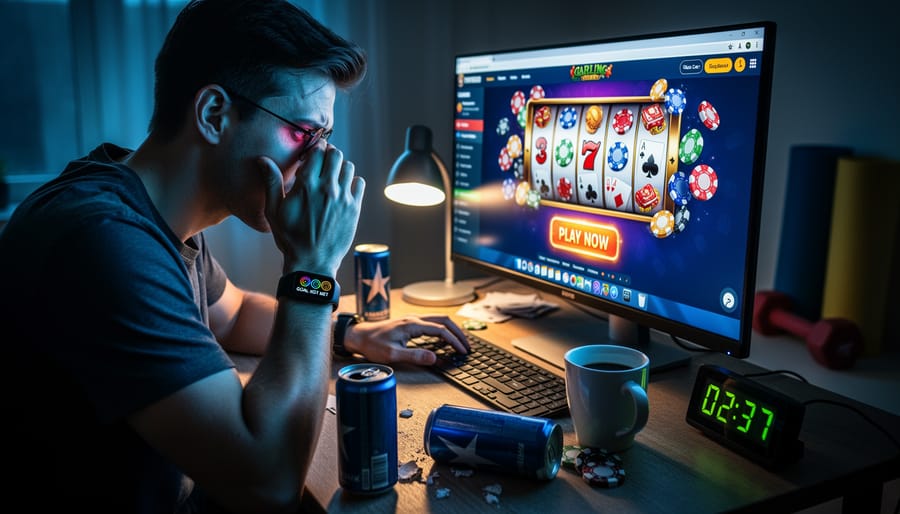
Setting Time Boundaries That Protect Your Wellbeing
Time boundaries aren’t about restriction, they’re about creating space for everything else that matters in your life. When online gambling sessions stretch beyond your intended timeframe, they pull energy away from fitness routines, meal preparation, social connections, and sleep quality.
Start by defining your daily limit before you begin any gambling session. Choose a realistic window that fits your schedule without competing against priorities like your morning workout or evening wind-down routine. Write this limit down somewhere visible, or better yet, set it as a calendar block on your phone. Treating gambling time like any other scheduled activity helps your brain recognize it has defined boundaries.
Scheduled breaks during longer sessions protect both your physical and mental health. Every 45-60 minutes, step away from the screen for at least 10 minutes. Use this time to stretch, refill your water bottle, or simply look at something beyond arm’s length to give your eyes a rest. These interruptions also create natural decision points where you can reassess whether you’re still enjoying the activity or just going through motions.
Accountability systems work because they make time boundaries visible to someone besides yourself. Share your limits with a friend or partner who can check in with you, or use apps that track and report your screen time. Some people find success with deposit limits on gambling platforms themselves, which create automatic stopping points that override in-the-moment impulses.
The goal isn’t to suck the enjoyment from online gambling, it’s to ensure this hobby enhances your life rather than crowds out the health habits that keep you feeling your best.
Nutrition Habits to Support Mental Clarity and Focus
Pre-Session Nutrition Planning
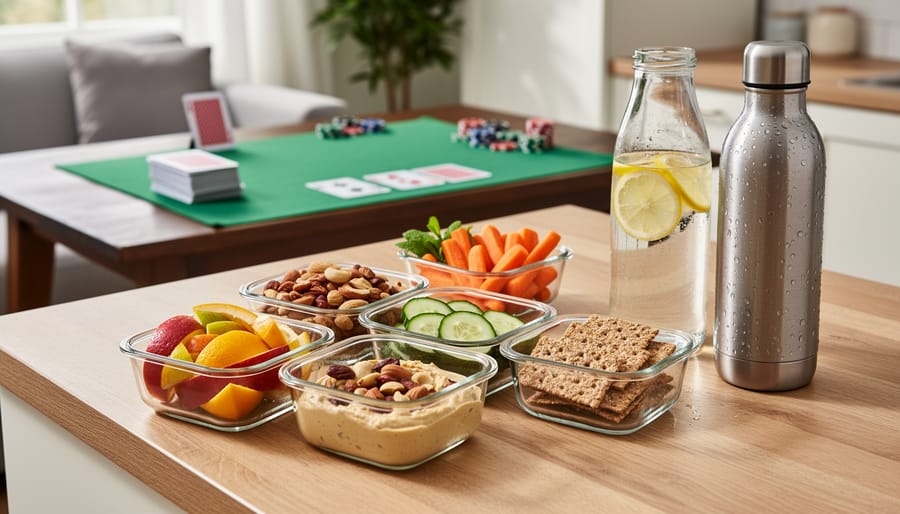
What you eat before an online gambling session can significantly impact your cognitive function, decision-making ability, and sustained focus. Think of your brain as a high-performance engine, it needs the right fuel to run smoothly for hours. Skip proper nutrition, and you’re setting yourself up for energy crashes, impulsive decisions, and diminished concentration when you need it most.
The key is combining complex carbohydrates with protein and healthy fats. This combination releases energy gradually, keeping your blood sugar stable and your mind sharp. Complex carbs from whole grains provide sustained glucose for brain function, while protein slows digestion and prevents the rapid spikes and crashes that come from sugary snacks. Healthy fats support cognitive performance and help you feel satisfied longer.
**Pre-session food options that deliver steady energy:**
- Greek yogurt with berries and a handful of almonds
- Whole grain toast with avocado and a hard-boiled egg
- Oatmeal topped with nut butter and sliced banana
- Hummus with vegetable sticks and whole grain crackers
- Apple slices with almond butter and a few walnuts
- A balanced smoothie with protein powder, spinach, and frozen fruit
Timing matters too. Eat your pre-session meal or snack 30-60 minutes before you start playing, giving your body time to digest and convert food into usable energy. If you’re someone who benefits from meal planningprepare these options ahead of time so they’re ready when you need them. This removes the temptation to grab whatever’s convenient, usually processed snacks that’ll sabotage your focus.
Avoid heavy, greasy meals that make you sluggish, as well as high-sugar foods that promise quick energy but deliver crashes within an hour. Your goal is mental clarity and endurance, not a temporary buzz followed by brain fog.
Hydration and Its Role in Decision-Making
Your brain is about 75% water, and even mild dehydration can muddy your thinking in ways you might not notice until you’ve made a decision you regret. Research shows that dehydration impairs cognitive performanceparticularly in areas like attention, motor coordination, and executive function, the very skills you rely on when placing bets or managing your bankroll.
When you’re absorbed in a gambling session, it’s easy to go hours without drinking water. You might reach for coffee, energy drinks, or alcohol instead, all of which can actually worsen dehydration. This creates a cycle where your judgment gradually deteriorates without you realizing it, potentially leading to impulsive decisions or chasing losses.
A practical approach is to keep a large water bottle at your desk and set a simple rule: finish one full bottle during each session. Some people use phone reminders every 30 minutes, while others take a water break after every few hands or spins. You can also pair hydration with other healthy habits, stand up, stretch, and drink water together.
If plain water feels boring during long sessions, try infusing it with lemon or cucumber, or alternate between water and herbal tea. The goal isn’t perfection, it’s maintaining enough hydration that your brain can function at its best when you need sharp thinking most.
Physical Movement Strategies for Screen-Based Activities
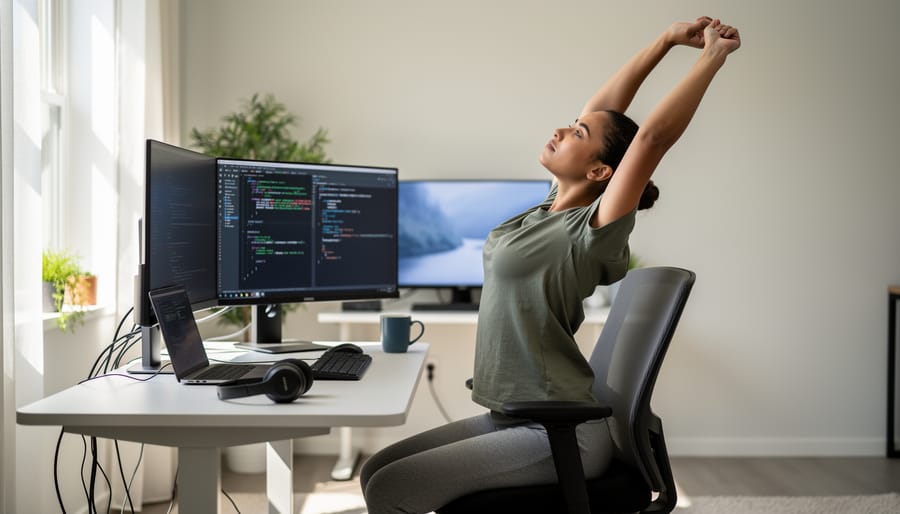
Extended screen time during online gambling sessions can wreak havoc on your body. Research shows that sedentary breaks have beneficial impacts on metabolic health, circulation, and even cognitive performance. The good news? You don’t need a gym membership or elaborate equipment to counteract sitting. Strategic movement breaks between gambling sessions can protect your posture, boost your energy, and keep your body functioning optimally.
Start by anchoring movement to natural transition points in your activity. When you finish a session or reach a predetermined time limit, stand up before diving back in. Set a timer for every 45 to 60 minutes as your non-negotiable cue to move. These breaks don’t need to be long, even two to three minutes makes a measurable difference.
Try this quick routine between sessions:
- Stand up and roll your shoulders backward five times, then forward five times to release upper body tension.
- March in place for 30 seconds, lifting your knees to hip height to get blood flowing to your legs.
- Do 10 gentle torso twists, rotating from your core while keeping your hips stable.
- Perform 5 wall push-ups or counter push-ups to engage your chest and arms.
- Finish with 30 seconds of deep breathing while stretching your arms overhead.
This five-minute sequence addresses the main problem areas from prolonged sitting: tight hips, rounded shoulders, and reduced circulation.
For longer gambling sessions, incorporate simple exercise routines that target postural muscles. Desk-friendly options include calf raises while standing, seated leg extensions, or hip flexor stretches in a lunge position. Keep resistance bands near your computer for quick arm exercises during breaks.
Your neck and eyes deserve attention too. Every 20 minutes, look at something 20 feet away for 20 seconds, the classic 20-20-20 rule. Roll your neck gently in both directions and perform chin tucks to counter the forward head position that screens encourage.
Consider a standing desk converter or adjustable setup if you gamble regularly. Alternating between sitting and standing throughout your session reduces the cumulative strain on any single position. Even shifting your weight from one foot to the other while standing counts as movement that benefits your circulation and joint health.
Managing Stress and Emotional Wellbeing
Recognizing Stress Signals
Your body communicates stress long before you consciously recognize something’s wrong. When online gambling starts affecting your mental health, physical signs often appear first. Watch for tension headaches, jaw clenching, or shoulder tightness that intensifies during or after sessions. Your heart rate might spike not from excitement, but from underlying anxiety about outcomes or time spent.
Behavioral changes reveal stress patterns too. Are you skipping meals or forgetting to eat while focused on gambling? Do you feel irritable when interrupted, or find yourself thinking about previous sessions when trying to focus on work or conversations? Sleep disruption counts as a red flag, lying awake replaying hands, waking frequently, or struggling to fall asleep after late-night sessions.
Emotional indicators matter equally. Notice if gambling triggers guilt, shame, or regret more frequently than enjoyment. Feeling defensive when loved ones mention your gambling habits, or secretive about time and money spent, signals emotional strain.
Track these patterns honestly. If stress signals persist beyond occasional sessions, they’re telling you something needs adjustment in how you’re approaching this activity.
Healthy Coping Mechanisms
When gambling sessions become stressful, having reliable alternatives ready makes all the difference. Building a toolkit of healthy coping strategies means you won’t default to continuing play when you really need a break.
Physical movement shifts your mental state quickly. A fifteen-minute walk around your block changes your environment and perspective, while stretching sequences release muscle tension that accumulates during screen time. Even simple activities like making tea or organizing a drawer give your mind something else to focus on and create natural separation from gambling.
Breathing exercises work anywhere, anytime. Box breathing, inhaling for four counts, holding for four, exhaling for four, holding for four, activates your parasympathetic nervous system and reduces the physiological stress response. Progressive muscle relaxation, where you systematically tense and release muscle groups, addresses the physical tension that builds during intense sessions.
Creative outlets provide emotional processing without screens. Journaling about your feelings after a loss helps you work through frustration constructively. Drawing, playing music, or cooking engages different parts of your brain and offers satisfaction that doesn’t depend on outcomes you can’t control.
Social connection matters tremendously. Calling a friend, petting your dog, or spending time with family reminds you that your worth isn’t tied to gambling results. These proven stress management techniques create emotional balance by reconnecting you with what genuinely matters in your life.
The key is practicing these alternatives regularly, not just during crises. When they’re familiar habits, you’ll actually use them when stress peaks instead of pushing through another session hoping your mood will improve.
Sleep Hygiene for Late-Night Online Activities
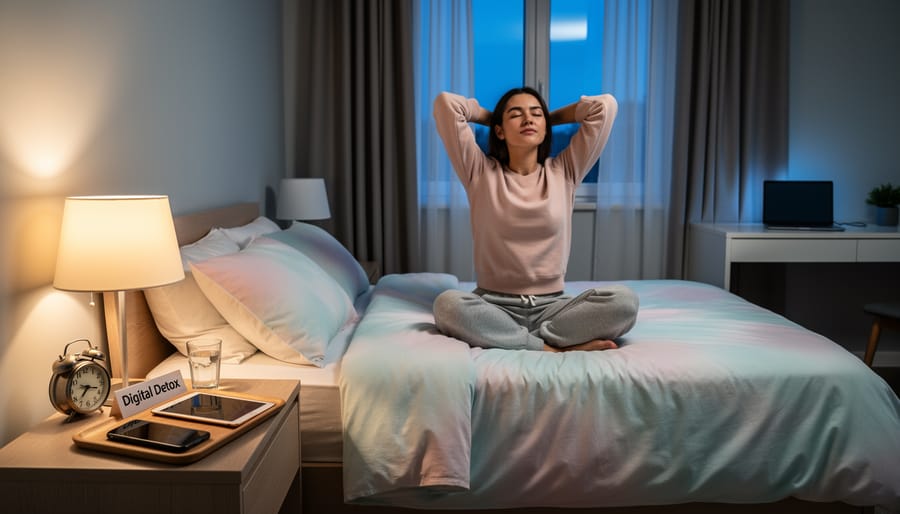
Late-night gambling sessions can seriously mess with your sleep, and that’s not just about feeling tired the next day. Your circadian rhythm, the internal clock that regulates sleep-wake cycles, gets disrupted by both the blue light from screens and the mental stimulation of gaming activities. This combination can suppress melatonin production for hours, making it harder to fall asleep even after you’ve logged off.
The most effective strategy is setting a firm cut-off time, ideally two to three hours before your target bedtime. This gives your nervous system time to downshift from the heightened alertness that gambling naturally triggers. If you’re currently playing until midnight and struggling to sleep, start by moving that cut-off back by 30 minutes each week until you reach a time that allows for quality rest.
Screen settings matter more than most people realize. Enable night mode or blue light filters on all devices you use for gambling, and consider wearing blue light blocking glasses during evening sessions. These measures won’t completely eliminate the impact, but they reduce the wavelengths that most interfere with melatonin production.
Create a buffer zone between your last bet and bedtime. This transition period shouldn’t involve more screens. Instead, try reading a physical book, light stretching, or a warm shower. These activities signal to your body that it’s time to wind down. Some people find journaling helpful for processing any emotions from the session, whether excitement from wins or frustration from losses.
Your bedroom environment should be gambling-free. Charge devices in another room and resist the temptation to check results or place one more bet from bed. That physical separation reinforces the mental boundary between active gambling and rest, protecting the sleep quality that underpins every other health habit you’re trying to maintain.
Building a Balanced Lifestyle Around Online Hobbies
Balance isn’t about perfection, it’s about making intentional choices that align with your broader health goals. Think of online gambling as one piece of your weekly schedule, not the centerpiece around which everything else revolves.
Start by mapping out your non-negotiable wellness commitments first. Block time for your workouts, meal preparation, social activities, and sleep before you even consider when you’ll log on. This approach ensures your foundational health habits remain protected. If you’ve committed to training three times per week or Sunday meal prep sessions, those stay fixed while gambling fits into the remaining gaps.
Consider creating activity bundles that pair online gambling with wellness practices. For instance, you might commit to a 30-minute walk before any gambling session, or only play after completing your planned workout. These paired behaviors create positive associations and prevent one activity from overtaking the other. You’re essentially using gambling as a reward for maintaining your health priorities rather than letting it compete with them.
Track how your gambling sessions affect other areas of your life. Keep a simple log noting whether you hit your step count, prepared healthy meals, or connected with friends on days you gambled versus days you didn’t. If you notice consistent patterns where gambling days correlate with skipped workouts or takeout meals, that’s valuable feedback telling you adjustments are needed.
Apply the same exercise strategies you’d use for any new habit: start small, build consistency, and scale gradually. Maybe you begin with two designated evenings per week rather than open-ended access. This structured approach prevents the creep that happens when “just one quick session” turns into hours that could’ve been spent on activities supporting your long-term wellness.
Maintaining your health while enjoying online gambling isn’t about choosing one or the other. It’s about building intentional habits that protect your wellbeing while you engage in activities you find entertaining. The strategies we’ve covered throughout this article give you a practical framework for doing exactly that.
When you set clear time boundaries, fuel your body with balanced nutrition, incorporate regular movement, manage stress effectively, and prioritize quality sleep, you create a foundation that supports both your health goals and your recreational choices. These aren’t restrictive rules. They’re supportive structures that help you show up as your best self, whether you’re at the screen or living the rest of your life.
Small, consistent changes make the biggest difference. Start with one or two strategies that resonate most with your current situation. Maybe that’s setting a daily time limit, scheduling movement breaks, or establishing a hydration routine. Build from there, adjusting as you learn what works for your unique lifestyle.
Remember that seeking support is a strength, not a weakness. If you’re finding it challenging to balance online activities with your wellness goals, or if gambling is impacting your mental health, reach out. Whether that’s working with a nutrition coach, connecting with a mental health professional, or joining a supportive community, you don’t have to figure this out alone.
Your health is worth protecting, and you have the tools to make it happen.