
Music to calm anxiety works best when it combines slow tempo, minimal lyrics, and predictable patterns that engage your parasympathetic nervous system. The most effective types include classical piano compositions, nature soundscapes, binaural beats at specific frequencies, instrumental jazz, guided meditation tracks, acoustic folk, and ambient electronic music, each offering distinct neurological benefits backed by research into how sound influences stress response.
Your brain processes different musical elements through separate pathways. Tempo directly affects heart rate variability, while harmonic structure influences cortical arousal patterns. This explains why a 60-80 beats-per-minute instrumental piece calms you more effectively than an upbeat song with complex lyrics, even if you subjectively prefer the latter. The key is matching music characteristics to your current anxiety state rather than defaulting to personal favorites.
What separates genuinely therapeutic music from simply pleasant background noise comes down to intentional composition. The seven types covered here share core features: they minimize sudden dynamic shifts that trigger startle responses, use repetition to create predictability your nervous system can synchronize with, and eliminate lyrical content that activates language-processing regions competing for cognitive resources when you’re already overwhelmed.
Understanding these mechanisms helps you choose strategically. Someone experiencing racing thoughts benefits more from binaural beats or ambient electronic tracks that provide consistent auditory anchoring, while physical tension often responds better to nature sounds or classical piano that encourage diaphragmatic breathing through their natural rhythmic patterns. The following curated list gives you specific options across all seven categories, along with guidance on when and how to use each type for maximum anxiety relief.
How We Curated This List
We selected these seven types of music using four specific criteria grounded in both research and real-world accessibility. First, we prioritized music types with documented effects on anxiety symptoms in published studies examining physiological markers like heart rate variability and self-reported stress levels. Second, we focused on specific musical characteristics known to promote relaxation: tempos generally between 60-80 beats per minute (matching a resting heart rate), consistent rather than jarring dynamics, and instrumentation that doesn’t demand active cognitive processing.
Third, we considered accessibility. Every type on this list can be found easily through mainstream platforms like Apple Music, which offers millions of songs across these categories through searchable playlists and curated collections. You shouldn’t need specialized equipment or subscriptions beyond standard streaming services to access calming music when you need it.
Finally, we evaluated practical application for daily life. Each type works in different contexts, some are better for active calming during acute anxiety, while others support background relaxation throughout your day. We excluded music requiring specific conditions (like complete silence) or extensive setup time, focusing instead on options you can implement immediately when anxiety strikes.
1. Classical Piano: Timeless Calm Through Simple Melodies
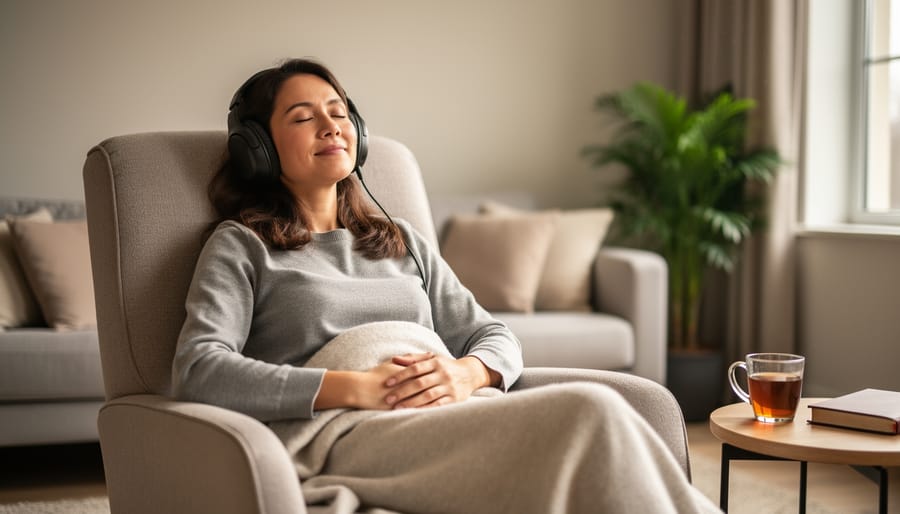
Classical piano music offers one of the most accessible entry points for using music to manage anxiety. The instrument’s natural acoustic properties and the genre’s emphasis on structure create an inherently calming listening experience that requires minimal cognitive processing.
Slow-tempo piano compositions work particularly well because they naturally guide your breathing and heart rate toward relaxation. Pieces with tempos between 60 and 80 beats per minute tend to synchronize with resting heart rate, creating a physiological anchor that counteracts the racing sensations anxiety produces. This synchronization happens passively, which means you can benefit without actively focusing on the music.
Minimalist piano works by composers like Erik Satie, Ludovico Einaudi, and Max Richter exemplify the characteristics that reduce cognitive load. These pieces typically feature repetitive melodic patterns, predictable chord progressions, and gentle dynamic ranges that let your mind settle rather than constantly react to new information. The predictability itself becomes therapeutic, offering structure during moments when anxiety makes everything feel chaotic.
When selecting classical piano pieces for anxiety relief, look for:
- Tempos between 60-80 BPM that match resting heart rate
- Consistent dynamics without sudden loud passages or dramatic crescendos
- Simple harmonic progressions that feel resolved rather than tense
- Longer compositions (8-20 minutes) that allow sustained relaxation
You can find extensive classical piano collections through streaming platforms. Apple Music offers millions of songs across various classical categories, making it easy to explore different composers and styles. Search for terms like “peaceful piano,” “minimalist classical,” or “calm piano” to access curated selections designed specifically for relaxation. Many listeners create personal playlists combining favorite pieces from different eras, blending Baroque simplicity with contemporary minimalism for a customized anxiety-relief soundtrack.
2. Nature Sounds and Ambient Recordings: Biophilic Audio
The sound of rain pattering against windows or waves rolling onto shore isn’t just pleasant background noise. These natural soundscapes actually trigger measurable physiological changes that reduce anxiety symptoms. Your body responds to nature sounds differently than it does to urban noise or silence, activating what researchers call the relaxation response.
The biophilia hypothesis explains why this happens. Humans evolved in natural environments, and our nervous systems remain wired to find these sounds safe and restorative. When you hear rainfall, ocean waves, or forest ambience, your brain interprets these as signals that you’re in a secure environment free from immediate threats. This perception shifts your autonomic nervous system away from the fight-or-flight state that fuels anxiety.
Research demonstrates that nature soundscapes can lower heart rate and reduce cortisol levels within minutes of listening. The unpredictable yet rhythmic quality of these sounds engages your attention just enough to interrupt anxious thought patterns without demanding active focus. Unlike music with melody or lyrics, nature recordings provide what acoustics researchers call a “non-demanding auditory environment” that allows mental restoration.
You’ll find extensive nature sound options on streaming platforms like Apple Music, where millions of songs include ambient recordings and nature-focused playlists. Standalone recordings of specific environments like thunderstorms, flowing streams, or wind through trees let you choose soundscapes that personally resonate with you. Some people find ocean waves most calming, while others prefer gentle rain or forest birdsong.
The beauty of nature sounds is their simplicity. No specialized equipment needed, no complex techniques to learn. Just press play and let your evolved biology do what it does naturally when surrounded by the sounds of the natural world.
3. Binaural Beats: Frequency-Based Anxiety Relief
Binaural beats work by playing two slightly different frequencies in each ear through headphones. Your brain perceives a third tone, the difference between the two frequencies, that isn’t actually present in the audio. This phenomenon, called frequency following response, occurs when your brain synchronizes its electrical activity to match the perceived beat.
Different frequency ranges correspond to different brain wave states. Alpha waves (8-13 Hz) are associated with wakeful relaxation and calm focus, the mental state you experience during light meditation or quiet reflection. Theta waves (4-7 Hz) occur during deep relaxation, daydreaming, and the transition into sleep. Both ranges can support anxiety reduction by shifting your brain away from the beta wave state (14-30 Hz) that accompanies active thinking and worry.
Research shows mixed but promising results. Some studies demonstrate measurable reductions in anxiety symptoms when participants listen to alpha or theta binaural beats for 15-30 minutes, while others show minimal effects beyond placebo. The technology hasn’t been studied as extensively as other music interventions, so treat it as an experimental tool rather than a proven solution.
You’ll find binaural beats widely available on streaming platforms, often marketed specifically for anxiety relief or meditation. Look for tracks labelled with alpha or theta frequencies and avoid anything promising miraculous results. Many people use binaural beats as background during meditation, work, or before sleep. Start with shorter sessions to see how you respond, and remember that the headphone requirement makes this option less practical for situations where you need to remain aware of your surroundings.
4. Instrumental Jazz: Smooth and Structured Relaxation

Instrumental jazz offers a unique balance for anxiety relief: it’s structured enough to feel organized and predictable, yet varied enough to keep your mind gently engaged without demanding active attention. Unlike some repetitive ambient music, mellow jazz styles provide what researchers call “optimal complexity”, just enough musical interest to occupy racing thoughts without adding stress.
Cool jazz and bossa nova stand out as particularly effective subgenres for calming anxiety. These styles typically feature moderate tempos that naturally slow your breathing pattern, smooth instrumental textures from saxophone or guitar, and gentle rhythmic patterns that feel grounded rather than unpredictable. The instrumentation matters here: acoustic instruments produce warmer tones than synthesized sounds, and the absence of lyrics means your mind won’t get caught analyzing words when you’re trying to relax.
What makes jazz especially suited for anxiety management is its structured improvisation. Musicians work within established chord progressions and melodic frameworks, so the music feels coherent and safe, but small variations keep each listening experience fresh. This combination can prevent your mind from either tuning out completely (which leaves space for anxious thoughts to creep back in) or becoming overstimulated by constant novelty.
Finding this type of music is straightforward through streaming platforms. Apple Music lets you explore millions of songs across jazz subgenres, and you’ll find dedicated playlists focused on relaxation and ambient jazz. Look for albums described as “smooth jazz,” “cool jazz,” or “Brazilian bossa nova”, artists like Stan Getz, Chet Baker, and João Gilberto exemplify the calming qualities you’re after. Start with curated playlists to identify what resonates with you personally, then build your own collection of go-to tracks for anxious moments.
5. Guided Meditation Music: Sound Plus Instruction
Guided meditation music merges soundscape with structure, giving your mind something to follow when anxiety makes concentration difficult. These tracks layer ambient music, often nature sounds, gentle synth pads, or sustained instrumental tones, with optional verbal cues that guide you through breathing exercises, body scans, or visualization practices. The combination addresses anxiety on two fronts: the music creates a calming auditory environment while the spoken instructions give your racing thoughts a concrete, productive direction.
What makes this type particularly effective for anxiety is the built-in framework. Instead of trying to calm yourself through sheer willpower, you have a voice walking you through proven relaxation techniques step by step. The music underneath reinforces each phase of the practice, often shifting subtly to match the guidance, slowing during deep breathing segments, opening up during visualization portions. This dual-track approach works especially well for people new to meditation who struggle with the “now what?” feeling when sitting in silence.
Effective meditation music typically shares these characteristics:
- Sustained tones that remain consistent rather than jumping between dynamics
- Absence of lyrics or complex melodies that might distract from the guidance
- Gradual progression that mirrors the natural arc of a meditation session
- Musical phrasing compatible with common breathing patterns (four-count inhale, four-count exhale)
Most streaming platforms offer extensive meditation music sections where tracks are organized by duration and focus area, anxiety relief, sleep preparation, stress reduction. You’ll find options ranging from five-minute breathing exercises to hour-long deep relaxation sessions. Start with shorter guided tracks when anxiety feels acute, using them as an immediate intervention tool. The spoken component gives you something concrete to anchor attention when your mind wants to spiral, while the music itself triggers the physiological relaxation response your body needs.
6. Acoustic Folk and Soft Singer-Songwriter: Human Connection Through Music
There’s something uniquely comforting about a human voice paired with the simple strum of a guitar. Acoustic folk and soft singer-songwriter music creates an intimate listening experience that can ease anxiety through both its musical qualities and its emotional connection.
This category includes artists who craft gentle melodies with minimal instrumentation, typically featuring acoustic guitar, light percussion, and warm, storytelling vocals. The tempo remains slow to moderate, usually between 60 and 90 beats per minute, which naturally encourages slower breathing and reduced heart rate. The predictable chord progressions and repetitive structures provide the consistency your nervous system craves during anxious moments.
What sets this music apart is the narrative element. Listening to someone share their story through song creates a sense of companionship that can counter the isolation often felt during anxiety. The human voice carries emotional nuance that purely instrumental music cannot, offering validation and understanding without demanding interaction. You can find curated playlists of this style easily on platforms like Apple Music, which offers millions of songs across various genres.
The simplicity matters too. Unlike densely produced tracks with multiple layers, acoustic arrangements create space rather than filling it. This restraint allows your mind to settle instead of processing competing sonic elements. Whether you’re managing everyday worry or more intense moments like travel stress the combination of gentle instrumentation and authentic vocal delivery provides both distraction and comfort.
Look for artists who emphasize melody over complexity, maintain consistent dynamics without dramatic volume shifts, and deliver lyrics with sincerity rather than intensity. This music works particularly well when you need something present but not demanding, active listening or background ambience.
7. Ambient Electronic and Downtempo: Modern Soundscapes for Relaxation
Ambient electronic and downtempo music represents a modern evolution in anxiety management, purpose-built for creating immersive calm. Unlike traditional genres that developed organically, this category emerged specifically from the wellness and relaxation space, with producers intentionally crafting soundscapes to support stress reduction.
The defining characteristic is the use of synthesized textures that evolve gradually rather than following verse-chorus structures. Layers of sustained tones, gentle pulsing rhythms at 60-80 beats per minute, and carefully designed sonic spaces create what sound designers call “frequency blankets.” These enveloping soundscapes work by occupying your auditory attention just enough to quiet mental chatter without demanding active listening, making them particularly effective when anxiety symptoms interfere with concentration.
Downtempo tracks typically feature minimal melodic content, focusing instead on textural richness and spatial depth. Think washes of synthesizer pads, filtered environmental sounds, and subtle rhythmic elements that provide structure without urgency. This approach creates a sonic environment that supports relaxation while remaining interesting enough to anchor wandering thoughts.
You’ll find abundant options in wellness-focused playlists across streaming platforms. Apple Music offers millions of songs across genres, making it easy to explore ambient and electronic categories. Look for playlists labeled “Deep Sleep,” “Study Focus,” or “Meditation Soundscapes,” which frequently feature downtempo and ambient selections.
The accessibility matters here. Since this genre developed recently, most tracks are available digitally, and many producers create extended mixes specifically for sustained listening sessions. You can play these soundscapes during work, before sleep, or any time you need to establish a calming auditory environment without the distraction of lyrics or dynamic changes.
How to Access and Use Anxiety-Calming Music
Finding and using anxiety-calming music is easier than ever thanks to streaming platforms. Apple Music offers millions of songs across categories, making it simple to explore the seven types we’ve covered, whether you prefer classical piano, nature sounds, or ambient electronic compositions. Start by searching for terms like “calm,” “relaxation,” “meditation,” or “anxiety relief” in the platform’s playlist section. Many curated collections exist specifically for stress reduction and mental wellness.
Creating a personal playlist gives you quick access during anxious moments. Save tracks that genuinely calm you, building a library tailored to your preferences. Some people respond better to instrumental jazz while others find acoustic folk more soothing. The key is experimenting to discover what works for your nervous system.
Here are practical guidelines for integrating music into your anxiety management routine:
- Keep playlists between 20-40 minutes for focused listening sessions
- Set volume at a comfortable level, loud enough to engage attention but not overwhelming
- Combine music with breathing exercises or gentle movement for enhanced benefits
- Listen proactively during your day rather than waiting for severe anxiety to peak
- Create different playlists for various situations, morning routines, work breaks, bedtime
Timing matters. Many people find morning listening sets a calmer tone for the day, while others use music during transitions between activities or before bed. Regular use helps build resilience over time, training your nervous system to relax more readily.
Music works best as part of a comprehensive approach. Pair it with other wellness practices and consider mental health advocacy resources if anxiety significantly impacts your daily life. Apple Music’s accessibility across devices, web, app, and Android, means your calming soundtracks travel with you wherever you need them.
Common Questions About Music for Anxiety
How long should I listen to calming music each session?
Most people find 15 to 30 minutes effective for noticeable anxiety reduction, though even 5 to 10 minutes can help during acute stress. Listen until you feel your body relax and your breathing slow; there’s no strict minimum or maximum.
Can music replace therapy or medication for anxiety?
Music is a helpful tool for managing anxiety symptoms, but it shouldn’t replace professional treatment if you’re dealing with clinical anxiety. Think of it as one part of a comprehensive approach that might include therapy, medication, exercise, and other wellness practices.
Does calming music work for everyone?
While research shows music can reduce anxiety for many people, individual responses vary based on personal preferences, musical background, and the nature of your anxiety. What soothes one person might not resonate with another, which is why experimenting with different types matters.
What if I don’t like one of the recommended music types?
Skip it and try the others. Forcing yourself to listen to music you dislike can actually increase stress rather than reduce it. The seven types covered here offer variety precisely because people respond to different sounds.
How do I know if the music is actually working?
Pay attention to physical signs like slower breathing, reduced muscle tension, lower heart rate, and a quieter mind. You might also notice you’re able to focus better or feel more grounded after listening.
When’s the best time to listen to anxiety-calming music?
Use it whenever you feel anxious, before bed to improve sleep, during work breaks to reset, or as part of a morning routine to start your day calm. Regular listening can help train your nervous system to relax more easily over time.
The key to getting the most from anxiety-calming music is treating it as a personalized tool rather than a one-size-fits-all solution. Start with the types that appeal to you most, notice what shifts in your body and mind, and build listening into your daily routine where it fits naturally. You’re not looking for perfect silence in your head, just a gentler, more manageable level of mental noise.
Finding the right music to calm your anxiety is a personal journey, and these seven types offer distinct pathways to relief. Classical piano provides timeless simplicity, nature sounds connect you to calming natural rhythms, and binaural beats use specific frequencies to shift your mental state. Instrumental jazz adds structure without overstimulation, guided meditation music supports mindfulness practices, acoustic folk offers human warmth, and ambient electronic creates modern immersive soundscapes.
Music works best as one component of a broader anxiety management strategy that might include therapy, physical activity, sleep hygiene, and stress reduction techniques. What calms one person might not resonate with another, so give yourself permission to experiment across these categories. Start with the types that appeal most, notice how your body and mind respond, and build personalized playlists that genuinely help you.
Sustainable wellness comes from finding tools that fit naturally into your life. If you’re looking for expert guidance on creating a comprehensive approach to managing anxiety and building healthier habits, Health Habits’ coaching services can provide personalized support tailored to your specific needs and goals.